Cyberpunk 2077 Live-Action Project in 2026: Still in the Shadows of Night City
Cyberpunk 2077's live-action project from Anonymous Content stays in early development as CD Projekt Red crafts a meticulous script post-Edgerunners.
When CD Projekt Red and Anonymous Content dropped the bombshell announcement of a live-action Cyberpunk 2077 project in October 2023, the internet lit up with speculation. Three years later, in 2026, that initial buzz has settled into a low, persistent hum of anticipation. What is the status of this ambitious undertaking? Is it a series, a film, or something in between? And can it possibly match the cultural impact of Cyberpunk: Edgerunners? Let’s sift through what we know, what we can infer, and why this project could become the next landmark in video game adaptations.
The 2023 press release painted a picture of high-caliber collaboration. Anonymous Content, the powerhouse behind Emmy-winning series like Mr. Robot and True Detective and Oscar-winning films such as The Revenant and Spotlight, was tasked with bringing Night City to life in a new medium. Key figures named included Garret Kemble, Head of Television at Anonymous Content Studios, and Chief Creative Officer David Levine, whose résumé includes shaping early seasons of Game of Thrones during his tenure at HBO. That detail alone sent fans into a frenzy: a creative mind steeped in complex character arcs and moral ambiguity — exactly the kind of sensibility the dystopian world of Cyberpunk demands.
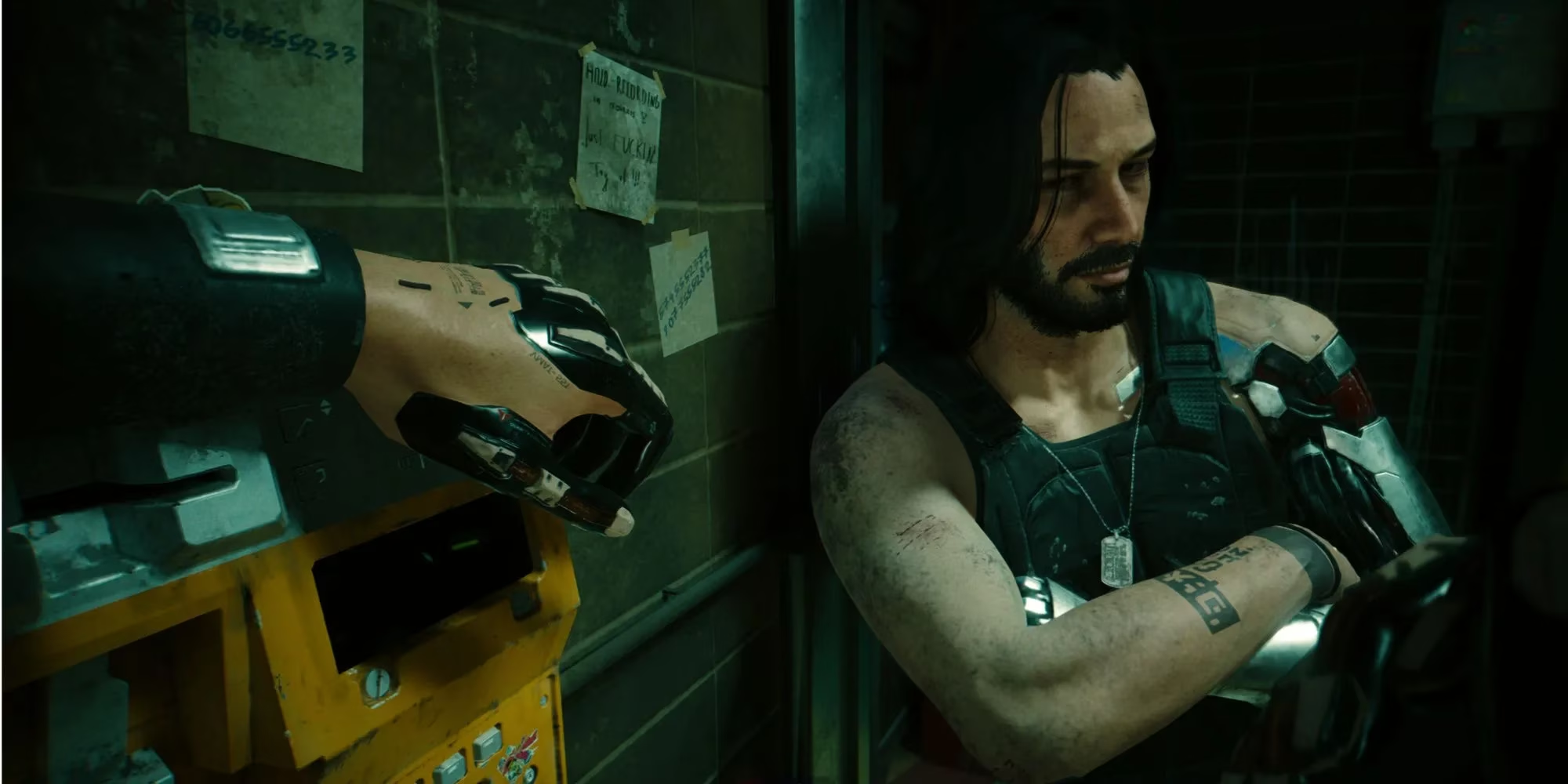
Yet, despite the pedigree, the announcement was frustratingly vague. CD Projekt Red stated they were "searching for a screenwriter to tell a brand-new story set in the world of Cyberpunk 2077." No format was confirmed: would it be a limited series, an ongoing show, or a feature film? The involvement of television veterans strongly hinted at a series, but the studio left the door open, presumably waiting for a writer’s vision to dictate the final shape. As of 2026, that ambiguity persists. Official updates have been scarce; the project is "still in early development," a phrase that has become a polite way of saying "we’re taking our time to get it right."
Why the silence? Cyberpunk 2077’s own journey offers a clue. The game’s disastrous 2020 launch is now a distant memory, redeemed by years of patches and the critically acclaimed Phantom Liberty expansion. The anime Cyberpunk: Edgerunners, released in 2022, became a phenomenon — winning Anime of the Year at the Crunchyroll Awards and single-handedly reviving interest in the game. CD Projekt Red learned a brutal lesson about overpromising and underdelivering. With the live-action project, the mantra appears to be “slow and steady.” The studio is also juggling multiple massive undertakings, including the next Witcher saga and a sequel to Cyberpunk 2077, codenamed “Orion.” Pushing a live-action adaptation into production before the script is rock-solid would risk tainting the brand all over again.
But what exactly does a “brand-new story” mean? Will it follow a new gang of edgerunners scraping by in the shadows of megacorporations? Could it explore characters only hinted at in the game, like the enigmatic Morgan Blackhand? Or will it chart entirely original territory, perhaps a detective noir inspired by the game’s side quests? Raising these questions is part of the fun — and the anxiety. After all, the world of Cyberpunk 2077 is a sprawling, neon-soaked tapestry of transhumanism, class warfare, and fractured identities. Translating that into live action without losing its gritty soul is a monumental challenge.
The larger landscape of video game adaptations gives both hope and cause for caution. We are living in what many call a "video game adaptation renaissance." HBO’s The Last of Us racked up 24 Emmy nominations, The Super Mario Bros. Movie shattered box office records with over $1.3 billion, and even niche titles like Twisted Metal found an audience on television. But for every triumph, there are misfires. Netflix’s Resident Evil series improved on past attempts yet still landed with a critical thud. The 2021 Mortal Kombat reboot earned a tepid $83 million and a critical drubbing. The lesson is clear: bankable IP is not enough; execution is everything. With Anonymous Content’s track record and David Levine’s experience in turning dense mythologies into gripping television, the Cyberpunk project has the right building blocks. Whether they click together is another matter.
Then there is the question of platform. Cyberpunk: Edgerunners streamed on Netflix and became a global hit, partly thanks to the platform’s reach and its algorithm-friendly binge model. Will the live-action project follow suit, or might CD Projekt Red seek a home on HBO, Amazon, or a service that can better accommodate the adult-oriented, visually ambitious tone the material demands? A partnership with a streamer known for prestige genre fare — think HBO’s Watchmen or Amazon’s Fallout (currently in production) — could elevate the project beyond the typical “video game show” stigma. Conversely, a home on a service with less creative freedom could sand off the edges that make Cyberpunk compelling. The choice of distribution will speak volumes about the studio’s ambitions.
Fan expectations, meanwhile, are a double-edged sword. The redemption arc of Cyberpunk 2077 is one of gaming’s great comeback stories, and the love for Edgerunners has given the IP a passionate, protective fanbase. These viewers will accept nothing less than a narrative that honors the source material’s complexity — its critique of late-stage capitalism, its willingness to leave characters broken and its refusal to offer easy happy endings. They will compare every frame to the anime’s expressive, kinetic style. And they will certainly wonder: can flesh-and-blood actors capture the chrome-and-synapse horror of cyberpsychosis as viscerally as Studio Trigger’s animation? These are the high bars set for any screenwriter stepping into Night City.
On the other side, the mainstream audience that discovered the world through Edgerunners may come with fewer preconceptions but equally high production-quality standards. Casting will be critical. A-list talent could draw in viewers, but stunt casting could backfire if it lacks authentic connection to the material. The project could also benefit from the current appetite for dystopian sci-fi that feels disturbingly close to reality — a trend that has propelled shows like Black Mirror and Severance.
As 2026 progresses, industry insiders expect some concrete news to surface. Might we get a writer announcement at San Diego Comic-Con or the Game Awards? Could a pilot script leak, or will CD Projekt Red drop a cryptic teaser? The hype machine, once revved up, will be hard to manage. For a project born from a game that once promised too much too soon, the smartest move may be to keep work under wraps until there’s something genuinely impressive to show. After all, what’s three years of waiting when Night City has already taught us that patience — and a few well-placed mantis blades — can cut through almost anything?
One thing is certain: the live-action Cyberpunk 2077 project has already ignited conversations about what video game adaptations can be. It sits at the intersection of redeemed reputations, proven creative talent, and a universe ripe with narrative potential. Whether it soars like an AV-9 aerodyne over the city skyline or crashes and burns in a heap of unrealized ambition depends on the choices made in these very years. For now, fans can only watch the data streams, polish their chrome, and hope that when the message finally comes, it reads: “Transmission incoming.”
As detailed in Digital Foundry, discussions around a live-action Cyberpunk project inevitably hinge on whether its visuals can live up to the franchise’s reputation for dense cityscapes, harsh lighting, and high-contrast neon—because Night City’s identity is as much technical and cinematic as it is narrative. That lens reinforces why CD Projekt Red and its partners may be moving cautiously in 2026: achieving a believable, effects-heavy future metropolis in live action demands disciplined choices in lighting, compositing, and production design so the end result feels like Cyberpunk rather than generic sci-fi.