Cyberpunk 2077's Combat Legacy: Why It Remains the Gold Standard for First-Person RPG Action in 2026
Cyberpunk 2077 combat system and first-person RPG action shine brilliantly, delivering fluid, immersive battles that set a new genre standard.
Reflecting on the gaming landscape of 2026, it's remarkable to consider the journey of Cyberpunk 2077. While the conversation around its launch and the promises of its pre-release era will forever be part of its history, one aspect has not only endured but been celebrated consistently through years of updates: its combat system. As someone who has navigated the neon-drenched streets of Night City across multiple playthroughs, I can affirm that the game's approach to real-time action sets a benchmark that few other first-person RPGs have managed to meet, even now. The foundational work laid by the original release and significantly enhanced by patches like the transformative 2.0 update has created a combat experience that feels more like an artful dance of destruction than a simple stat-check.
Why Cyberpunk 2077's Combat Feels So Exceptionally Good
When I compare Cyberpunk 2077 to other giants in the genre, the difference in combat fluidity is stark. Many first-person RPGs, especially earlier titles, often struggle to marry their deep, number-crunching progression systems with satisfying moment-to-moment action. Weapons can feel like peashooters, and enemies might stand motionless until their health bar depletes, turning epic battles into awkward slap-fights. Cyberpunk 2077 masterfully avoids these pitfalls. The secret sauce lies in a potent combination of visceral feedback, intelligent difficulty scaling, and a world that reacts to your violence.
The game's animations are a cornerstone of this success. Firing a heavy revolver isn't just a click and a number popping up; it's a thunderous recoil that jerks your view, accompanied by a satisfying boom. Enemies don't just absorb damage—they flinch, stagger, and get knocked off their feet. 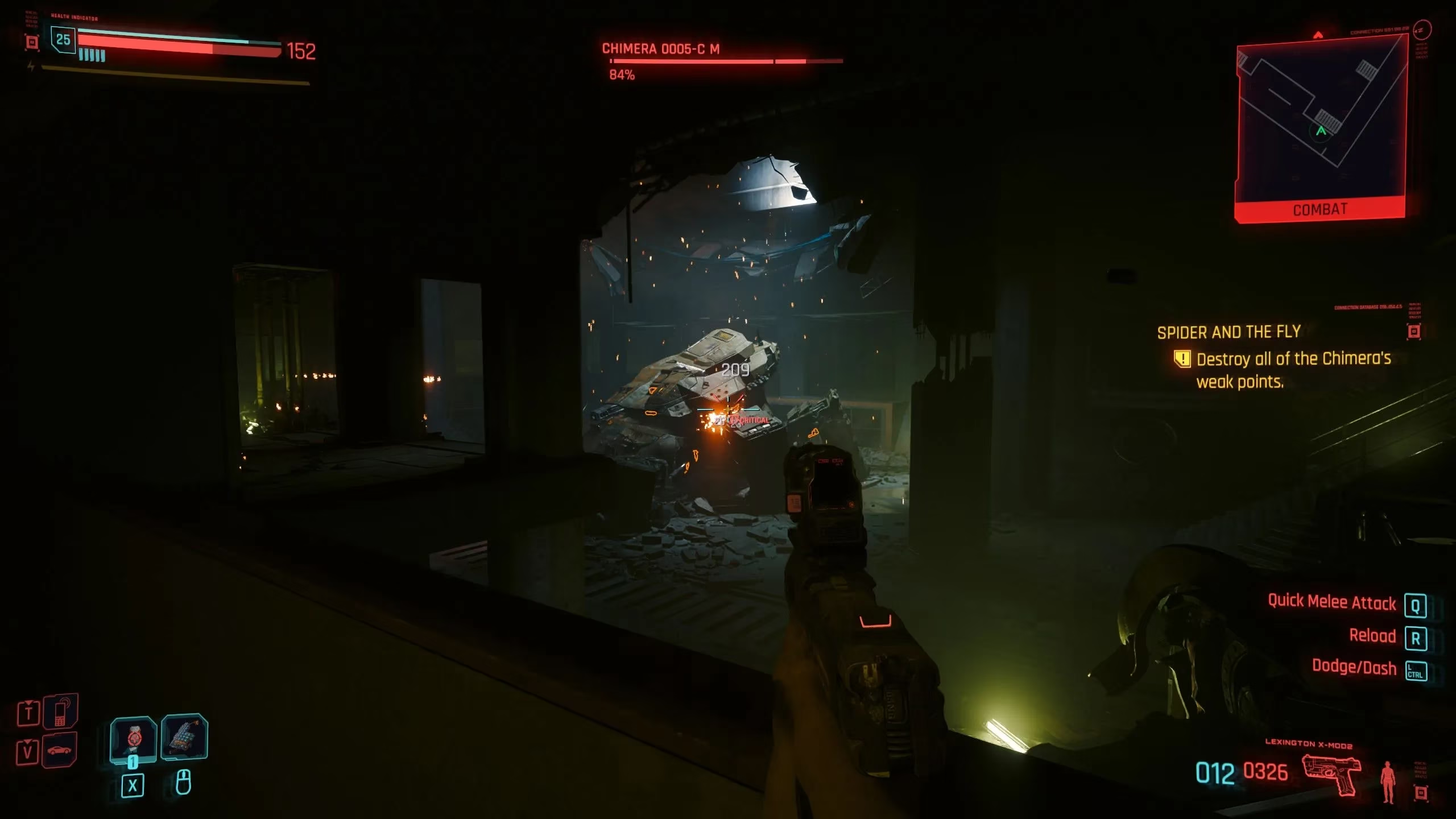 This immediate physical reaction sells the power fantasy. Even melee combat, often a weak point in first-person perspectives, feels impactful with stylish swings and heavy blows, though it admittedly lacks the depth of dedicated brawlers. Crucially, the game largely sidesteps the "bullet sponge" enemy problem on standard difficulties. Common foes go down with well-placed shots, making you feel lethal and efficient, a feeling that is core to the power fantasy of being a top-tier mercenary in Night City.
Building Your Legend: The Power of Character Customization
What truly elevates Cyberpunk 2077's combat from great to legendary is how it integrates with character progression. The revised perk and cyberware system from the 2.0 update empowers players to craft a V that is uniquely theirs, turning combat into a personalized power trip. The build variety is staggering:
-
The Sandevistan Samurai: Slowing time to a crawl, darting between enemies, and slicing them apart with a monowire or katana before they can even raise their weapon.
-
The Apex Netrunner: Hacking the city itself, turning security systems against enemies, and frying their synapses from across the street without firing a single bullet.
-
The Unstoppable Juggernaut: Activating Berserk and charging through hails of gunfire with a shotgun, a literal tank made flesh and chrome.
-
The Deadeye Sniper: Using optical implants and reflex boosters to land impossible headshots from a kilometer away.
The best part? You're not locked in. Perk points can be freely respecced, encouraging experimentation. I've started a playthrough as a stealthy hacker only to pivot mid-game into a grenade-chucking, shotgun-blasting maniac, and the systems supported that radical shift seamlessly. Cyberware like Reinforced Tendons for double-jumping or Kerenzikov for bullet-time dodges further opens up the combat arena, encouraging verticality and acrobatic flair. 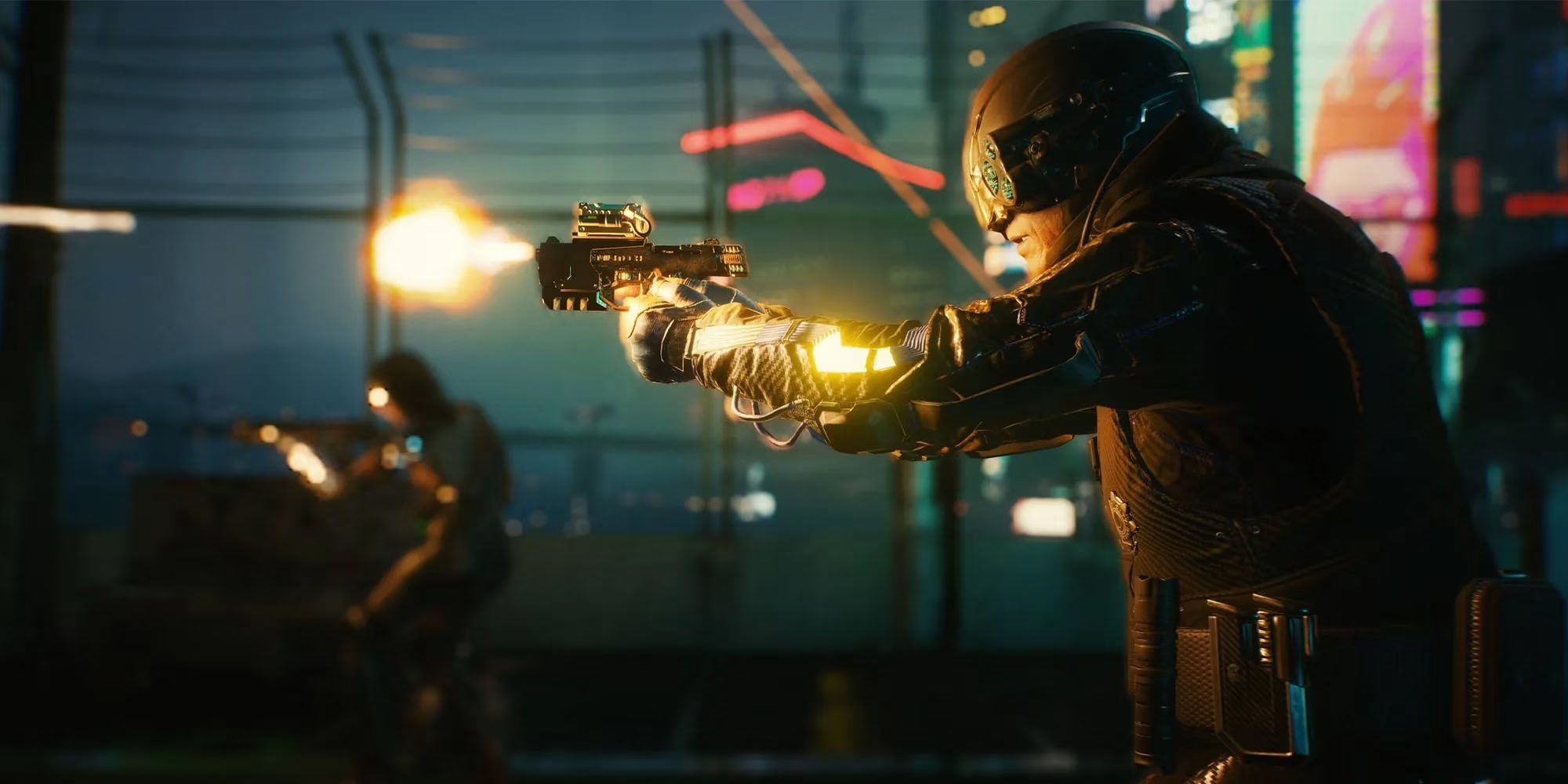
The Engaging Challenge and Evolving Arenas
A compelling combat system needs a worthy playground, and Cyberpunk 2077 provides it through smart encounter design. On its standard difficulty, the game strikes a near-perfect balance. It punishes recklessness—charging into a group of Arasaka guards without a plan is a quick way to a reload screen—but rewards tactical play and build synergy. The AI, while not revolutionary, is competent enough to flank, use cover, and force you to stay mobile.
Although enemy type variety isn't the game's strongest suit, the environmental diversity compensates brilliantly. A firefight in the cramped, multi-level corridors of a megabuilding plays entirely differently from a chaotic battle in the open badlands or a tense, stealth-oriented skirmish in a corpo plaza littered with cameras and turrets. Each location demands adaptation, forcing you to consider sightlines, cover, and which cyber-abilities will give you the edge. The 2.0 update also wisely addressed the old issue of infinite healing-item spam by introducing a cooldown system, restoring much-needed tension to prolonged fights.
Acknowledging the Cracks in the Chrome
No system is perfect, and Cyberpunk's combat has its share of flaws. On the highest difficulty, some enemies, particularly bosses and certain mechs, can indeed revert to feeling like damage sponges, testing patience more than skill. Certain builds, especially pure melee-focused ones, can hit frustrating walls against flying or heavily armored robotic foes. The hand-to-hand combat system, while visually cool, lacks the depth and fluidity of the gunplay or hack-based gameplay.
Yet, these are minor blemishes on an otherwise stellar canvas. In 2026, as we look back and eagerly await the confirmed sequel, Cyberpunk 2077's combat legacy is secure. It demonstrated that an RPG can have deep, numbers-driven progression without sacrificing the raw, responsive thrill of excellent first-person action. It created a system where style and substance coalesce, where every perk point spent and every piece of cyberware installed directly translates into a more explosive, more creative, and more personally satisfying way to dominate Night City. For any developer crafting a first-person RPG, the lesson from Cyberpunk 2077 is clear: make the player feel powerful, make the world react, and the combat will transform from a system into a symphony. 🎮💥