Cyberpunk 2077's Heroes Quest: A Masterclass in Digital Grief and Memorial, Still Unmatched in 2026
Cyberpunk 2077's Heroes mission delivers a poignant tribute to Jackie Welles, setting a new standard for emotional storytelling in RPGs.
Night City, a sprawling gland of neon, steel, and perpetual despair, has absorbed countless tragedies in the years since Cyberpunk 2077 first launched. Yet, even in 2026—after two major expansions, over thirty free updates, and a fan base that has transformed the game into a living anthology of stories—the death of Jackie Welles remains the sharpest splinter in the collective heart of its players. The \u201cHeroes\u201d side mission, which blossoms from that loss, is not merely a quest; it is a quiet, handcrafted ritual of remembrance that performs a delicate emotional surgery on anyone who steps into the candlelit shadows of El Coyote Rojo. Six years on, no other open-world RPG has managed to build a funeral pyre with such intimate, understated precision.
Unlocking this elegy is itself a test of empathy. During the botched heist that spits V and Jackie out of Konpeki Plaza in a smear of blood and regret, a dying Jackie slumps against the back seat of a Delamain taxi. In that pressurized stillness\u2014a moment when the entire plot suddenly gasps for air\u2014players are asked a question that feels like handling a live wire: what should be done with his body? If you choose to send him to Mama Welles or ask Delamain to wait until you can say goodbye, the game quietly plants a seed. It\u2019s a decision that mimics the fragile art of catching a floating feather before it touches polluted water\u2014easy to miss, irreversible once the car door closes behind you. Without it, the Heroes mission remains entombed in the code, and Night City rolls on without offering closure.
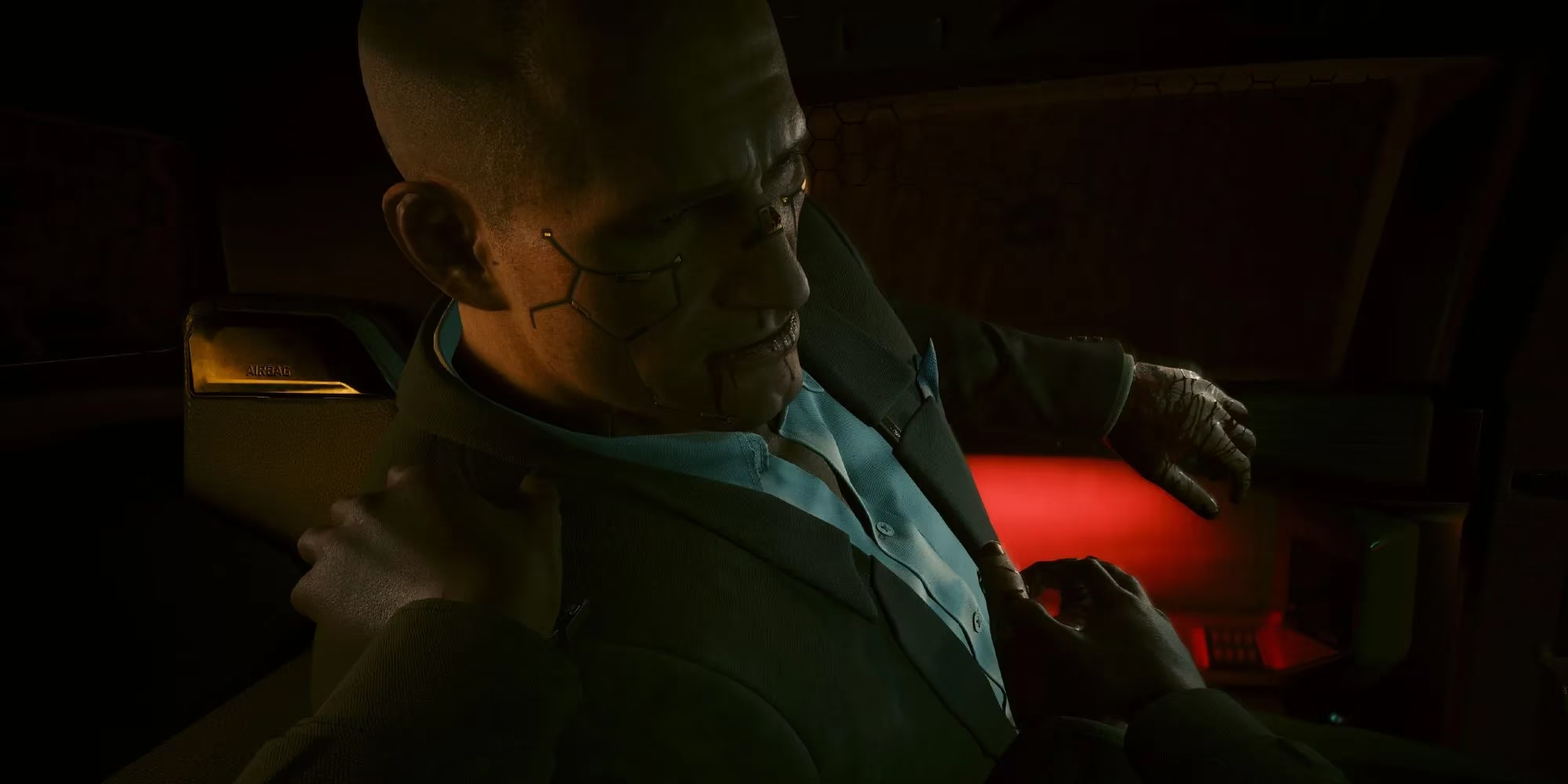
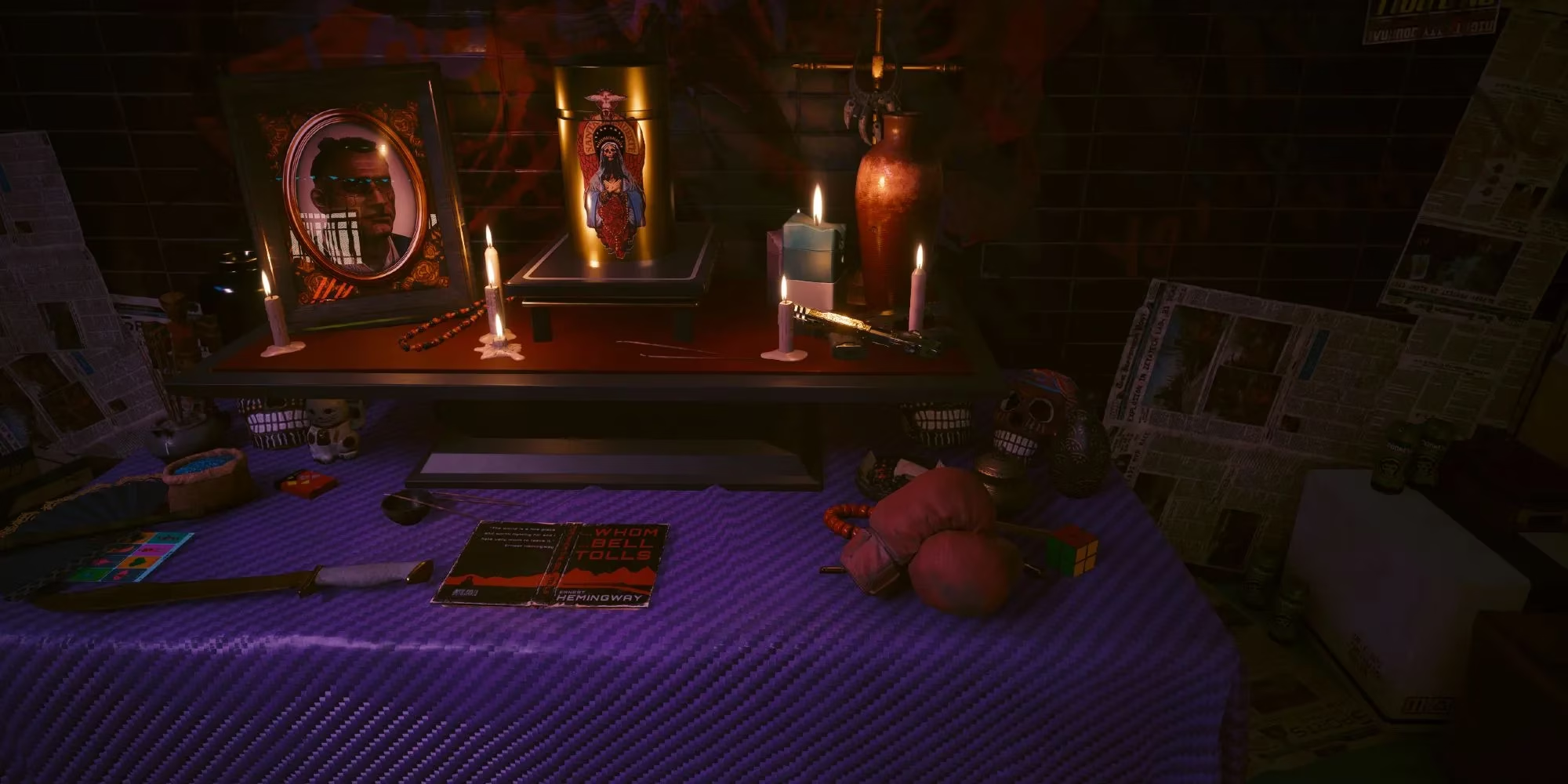
When Act 2 awakens and V surfaces from a haze of chrome and trauma, Mama Welles\u2019s call arrives like a voice transmitted through a shattered holo-frequency. She invites you to El Coyote Rojo, the bar that served as Jackie\u2019s second spine\u2014a place where his laughter still clings to the cracked leather booths like smoke. There, the task splits into two delicate ribbons: find an offering for Jackie\u2019s memorial altar, and gently persuade Misty, his girlfriend, to attend the service. The garage you enter is a time capsule left to gather the dust of unfulfilled dreams. Scanning its objects\u2014a scuffed basketball, a faded magazine with a pin-up on the cover, a toolbox that still carries the grease of his ambitions\u2014feels less like a game mechanic and more like tuning an antique radio, twisting a dial through static until you catch the ghost of a song that was Jackie\u2019s life. Each item is a synaptic spark; choosing one is like selecting the specific memory that will stand on the altar, a concrete fragment plucked from the digital neurosis of grief.
Misty\u2019s reluctance to attend is a subplot written in the language of intimate wounds. She trembles on the curb outside the garage, a bird with a fractured wing, and the conversation that follows demands the same precision as defusing a high-yield emotional mine. There is no skill check here that can be brute-forced; the game asks you to listen, to extend a hand that doesn\u2019t pull but simply waits. When she finally agrees, her acceptance is a small, exhaled earthquake\u2014proof that Cyberpunk 2077 understands grief not as a single blow, but as a series of aftershocks that only subside when witnessed by another.
The funeral itself is a masterclass in soft cinematic storytelling. Inside El Coyote Rojo, the light droops like warm honey, and familiar voices\u2014Padre, Mama Welles, Viktor Vector\u2014offer eulogies that are neither overwritten nor rushed. V can speak to each mourner, and these conversations ripple outward, shaping the texture of the moment. Then comes the final exchange with Mama Welles, where you can choose to scold her for excluding Misty from the family\u2019s cocoon of grief. It\u2019s a small, thorny interaction, but it flickers with the truth that even in loss, human pettiness and love can tangle into knots that only honest words can loosen. When the candles gutter and the bar falls silent, the game bestows its tangible rewards: Jackie\u2019s Arch Nazare motorcycle, a steel horse that now carries his memory through every district; the iconic pistols \u201cLa Chingona Dorada,\u201d a dual honor that lets you wield a piece of his legend; and his pin-up posters, which transform V\u2019s apartment from a cold megablock cell into a personal shrine.
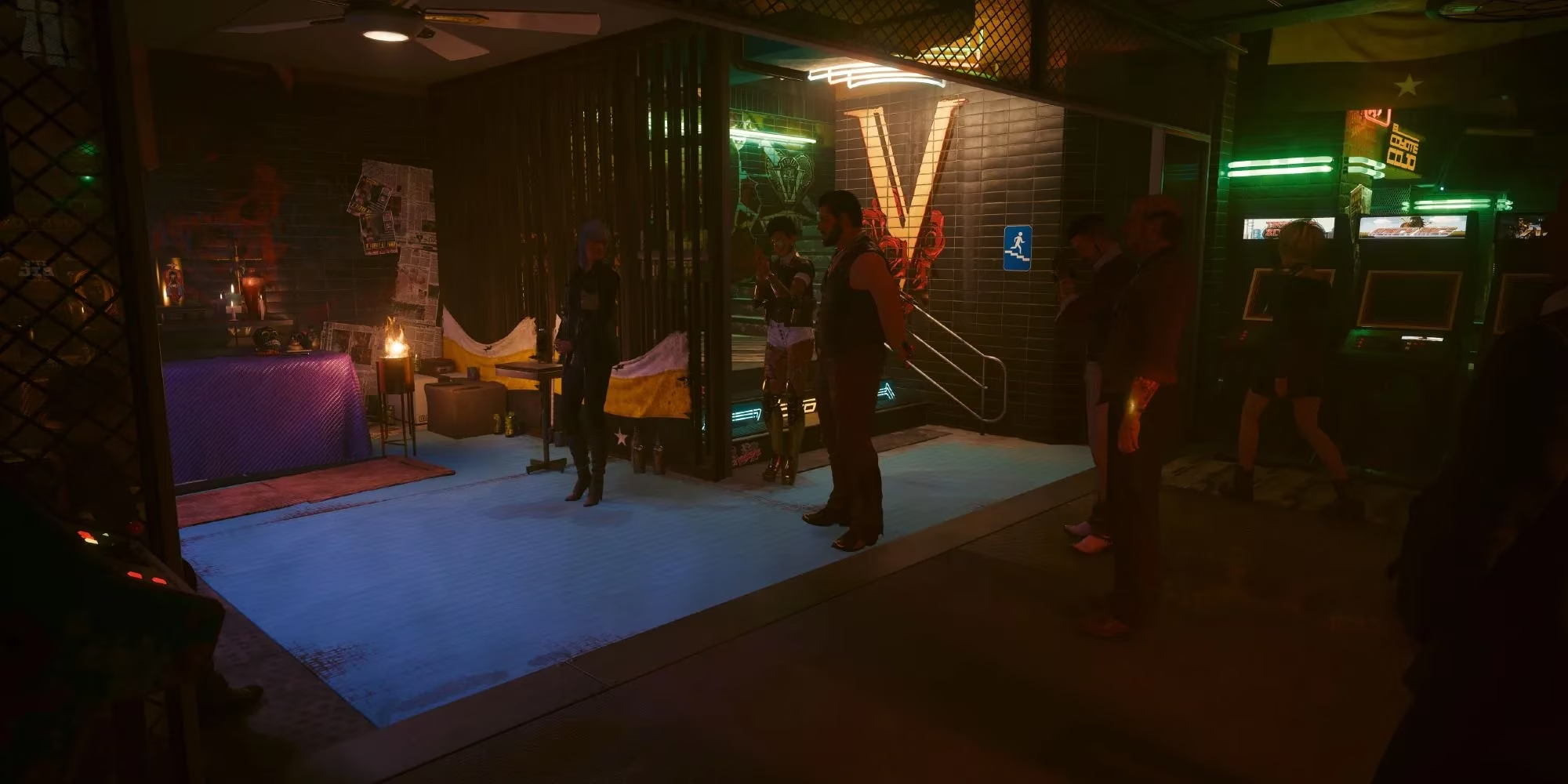
What elevates \u201cHeroes\u201d beyond a simple fetch-and-speak mission is its refusal to treat mourning as a checkpoint on a checklist. It is constructed like a meticulously folded origami bird\u2014each crease a conversation, each fold a choice made quietly. In 2026, when hyper-realistic simulations and AI-driven narratives have become the industry\u2019s loudest drumbeat, this quest remains an artifact of something rarer: a space where the player is not a god but a guest. It reminds us that even in a city built on chrome and cruelty, the most powerful upgrade is the ability to remain human long enough to say goodbye properly.