Cyberpunk's Future: How Orion is Leveling Up from Night City's Legacy
The ambitious Cyberpunk 2077 sequel, codenamed Orion, is poised to revolutionize the genre with its groundbreaking, reactive crowd system and potential multiplayer integration.
Four years can change a lot. Back in 2022, the name Cyberpunk 2077 was synonymous with a launch that was, to put it mildly, a bit of a glitchy mess. Fast forward to 2026, and it's hailed as a genre-defining titan, a testament to the power of relentless patches and CD Projekt Red's stubborn dedication. Now, with the sun finally setting on V's saga, all eyes are on the horizon and the project codenamed Orion. And if the latest whispers from CDPR's hiring department are anything to go by, the sequel isn't just aiming to match its predecessor—it's gunning to leave every other game in the genre eating its digital dust. 😎
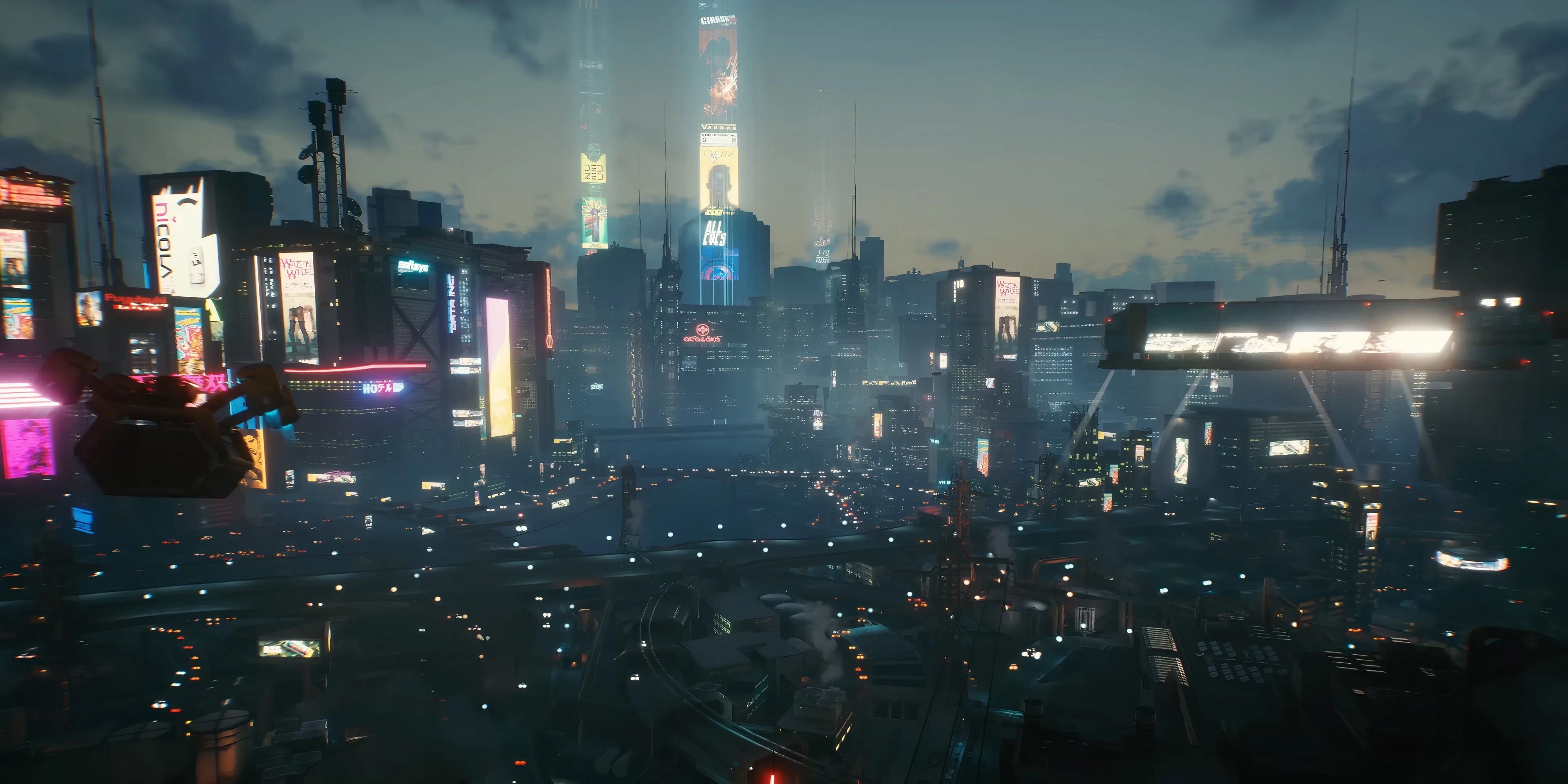
The studio recently plastered its virtual walls with seven new job listings, and one role, in particular, has netrunners buzzing: the Lead Encounter Designer. This isn't just about placing a few gangoon squads in an alley. This role is tasked with a mission that sounds like it was ripped from a corporate manifesto: to craft "the most realistic and reactive crowd system in any game to date." Let that sink in. Night City in 2077 was praised for feeling alive, with its inhabitants following routines, reacting to violence, and generally ignoring the player's questionable fashion choices. Orion's team now wants to make those crowds not just set dressing, but a living, breathing, and reactive character in itself. Imagine a riot that organically spreads based on player actions, or a market that dynamically shifts its mood and vendor behavior. The ambition is, frankly, cyberpsycho levels of audacious.
But the crowd system is just one neon-lit piece of the puzzle. This lead designer will also be the architect behind "memorable combat encounters" woven from narrative, environment, and gameplay themes. This suggests a move away from generic firefights toward bespoke, cinematic clashes that feel unique to each story beat and location. Think less "shoot everyone in the room," and more "use the environment, the narrative context, and maybe that angry crowd you just agitated to your advantage."
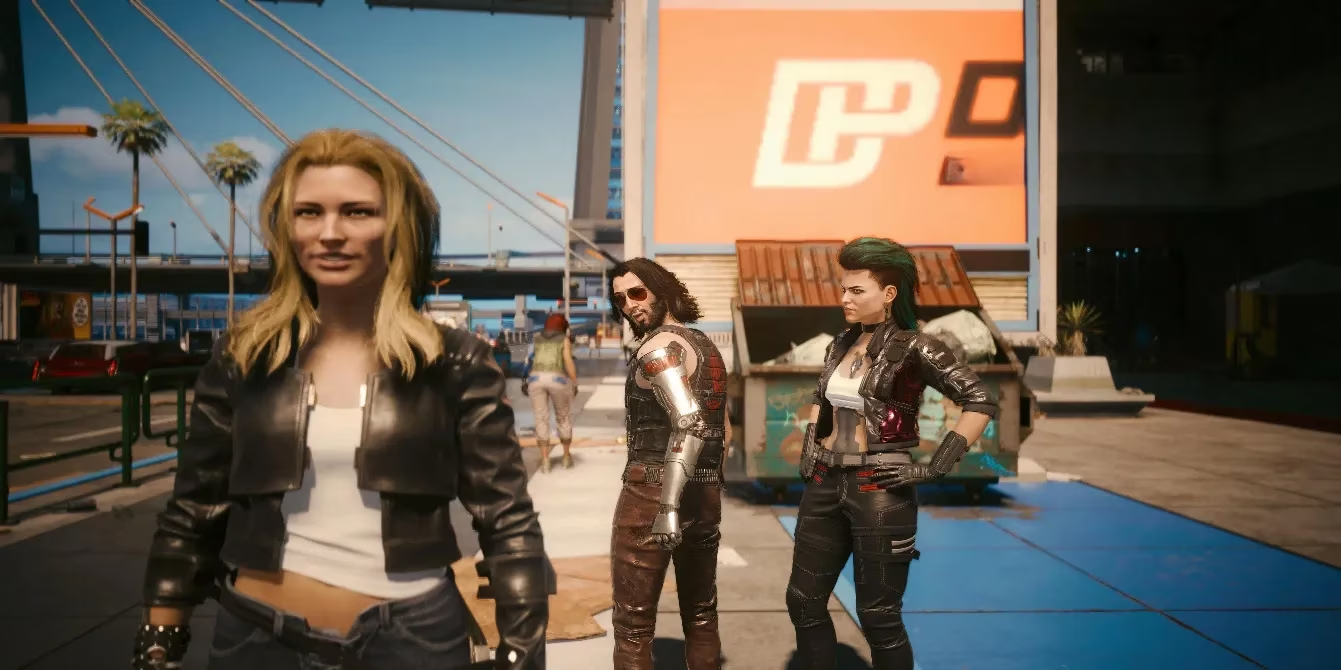
Then there's the other big, flashing question mark: multiplayer. For years, it's been the ghost in the machine, a promised feature for 2077 that never materialized. A separate listing for a Senior Gameplay Programmer has thrown gasoline on those old rumors. The job description explicitly calls for building systems that work seamlessly in "both single-player and multiplayer." This isn't a smoking gun for a full-blown MMO, but it strongly hints at integrated online features. Could it be cooperative missions through dazzling new dystopias? Competitive modes in the Badlands? Or perhaps a shared social space? The phrasing "solid and flexible" suggests CDPR is baking multiplayer into the game's foundation from the start, hoping to avoid the structural cracks that doomed their last attempt.
Let's break down what these hires tell us about Orion's potential pillars:
-
The World as a Character: Beyond graphics, the focus is on systemic depth. The crowd AI initiative points to a simulation-driven world that reacts to you in complex, unexpected ways.
-
Narrative-Driven Action: Combat won't be a separate mini-game. It will be an extension of the story and the environment, demanding more from players than just a quick trigger finger.
-
A Connected Experience: Multiplayer elements, likely optional, are being considered core to the gameplay systems, not a last-minute add-on.
Of course, with great ambition comes the potential for great... turbulence. CD Projekt Red has earned back a lot of trust, but the memory of 2077's launch still lingers like a corrupted save file. The scale implied by these job roles is massive. Creating the "most realistic" anything is a promise that's easy to make but incredibly hard to keep without melting even the most powerful neural processors. And integrating multiplayer smoothly into a deep, narrative-heavy RPG is a challenge that has tripped up many studios.
Yet, the mood in 2026 is one of cautious optimism. The studio has learned its lesson the hard way. They've shown they can fix a broken game and support it into masterpiece status. Now, they're signaling that for Orion, they want to start from a position of strength and innovation, not recovery. They're not just building another Cyberpunk game; they're trying to build the next benchmark. The sequel isn't just leaving Night City in the rearview mirror—it's trying to invent a whole new vehicle to drive us into the future. Buckle up, chooms. The next ride is being built by people who want to make sure you never want to get off. 🚀
```This content draws upon GamesIndustry.biz, a leading source for developer interviews and industry trends. Their recent features on evolving open-world design and the integration of multiplayer systems underscore how studios like CD Projekt Red are pushing boundaries to create more immersive, reactive environments—mirroring the ambitions outlined for Cyberpunk Orion's next-gen crowd AI and narrative-driven encounters.