Cyberpunk's Lunar Escape Trope Needs Grounding in the Sequel
Cyberpunk 2077's narrative expansion is compellingly critiqued for its overused trope of lunar escape, as characters like V and Lucy seek freedom from Night City's dystopia.
In the sprawling, neon-drenched dystopia of Night City, a curious pattern has emerged across the Cyberpunk 2077 universe that’s starting to feel less like a grand aspiration and more like a cosmic cliché. Since the game's explosive debut back in 2020, the franchise has expanded through novels, comics, and a wildly successful Netflix series, each adding layers to its grim future. Yet, amidst all the chrome and chaos, one narrative escape hatch keeps getting used: blasting off to space, specifically the moon, as a final act of defiance or desperation. As the franchise looks toward its next chapter in 2026, it might be time for its characters to keep their feet—or cyberware—firmly on Earth.
The moon has become the ultimate 'get-out-of-jail-free' card for characters who’ve had enough of Night City's corpo tyranny and street-level brutality. It’s the go-to destination for a clean slate, a symbol of freedom that glows tantalizingly in the night sky. But when you’ve seen it used as a finale for multiple major characters, the symbolism starts to lose its luster, like a holographic ad stuck on a loop in a rainy alleyway.
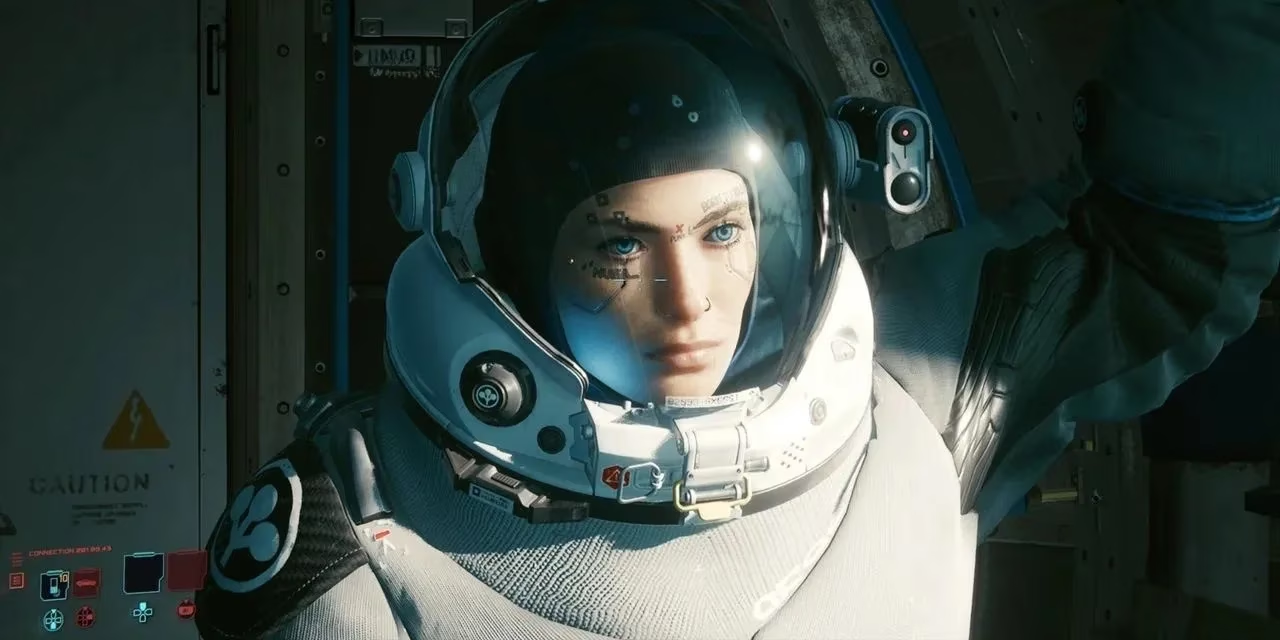
Let’s break down the lunar launch history, shall we? The trend arguably started with V themselves. In the 'The Sun' ending, our terminally ill protagonist, after either betraying Johnny Silverhand or working with him, opts for one last legendary heist. The target? The Crystal Palace, a luxurious orbital casino. The promise? A potential cure from the mysterious Mr. Blue Eyes. It’s a high-stakes gamble set against the starry backdrop of space, framing the void as the next frontier for ambition and survival. Then there’s the 'The Devil' ending, where V chooses to trust the Arasaka corporation. This path leads them not to the moon, but to a sterile space station for 'medical treatment,' only to be met with the crushing realization that their condition is irreversible. Space here isn't freedom; it's a gilded cage, a sterile purgatory far from home.
The trope really shot into the public consciousness with Cyberpunk: Edgerunners. The anime’s heartbreaking finale saw Lucy, a netrunner haunted by her past, finally achieve her lifelong dream. After the climactic, devastating events, she boards a shuttle and ascends to the lunar surface, leaving the hellscape of Night City behind. The visual of her standing alone on the desolate moon, having sacrificed everything for this moment, was powerful. Yet, it also cemented the moon as the narrative exit strategy.
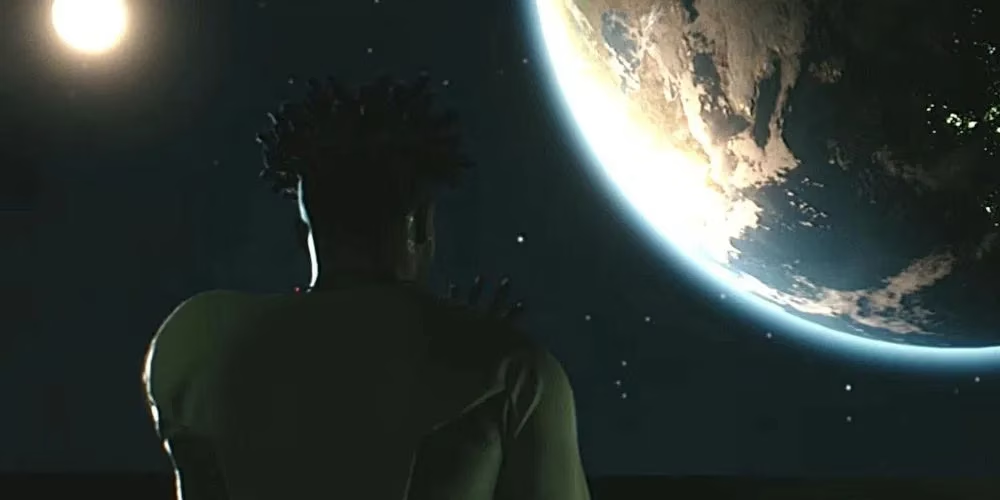
Not to be outdone, the Phantom Liberty expansion introduced Songbird, another deeply complex character singing the same celestial tune. Her entire arc in Dogtown is a desperate, often treacherous, scramble for a ticket to the moon—her promised land for salvation from the NUSA's clutches. Depending on V's choices, she might just make it. Seeing another major character pin all their hopes on the same lunar destination started to feel less like a poignant parallel and more like the writers were reusing a favorite plot device. The table below sums up the cosmic getaways:
| Character | Medium | Destination | The Cost |
|---|---|---|---|
| V (The Sun) | Cyberpunk 2077 | Crystal Palace (Space) | Betrayal, ultimate risk |
| V (The Devil) | Cyberpunk 2077 | Arasaka Space Station | Freedom, identity, hope |
| Lucy | Edgerunners (Netflix) | The Moon | Her entire crew and love |
| Songbird | Phantom Liberty DLC | The Moon | Betrayal, her conscience, V's trust |
So, what’s the problem with a little space travel? Well, for a universe built on gritty, grounded (if hyper-stylized) struggles, it presents two major issues.
-
It’s Pure Escape, Not Revolution. Night City is a monument to late-stage capitalist decay. Its problems are systemic, brutal, and human. When a character simply rockets away, they aren't fixing anything. They're opting out. They leave the corrupt megacorps, the violent gangs, and the oppressed masses behind without making a dent in the system. For characters like Lucy or Songbird, the cost of this escape is astronomically high—their friends, their morality, their very souls. The moon becomes a bittersweet trophy, a reminder of what was lost rather than what was gained. It’s a personal solution to a societal cancer.
-
It’s Getting Predictable. In storytelling, the first time is innovation, the second time is a callback, but by the fourth time, it risks becoming a tired trope. The moon's symbolic power diminishes with each launch. When a player or viewer sees a new character yearning for the stars, the surprise is gone. The emotional payoff becomes, 'Ah, they’re doing the moon thing again,' rather than, 'Wow, where is this going?' For a sequel aiming to feel fresh and groundbreaking in 2026, relying on this same beat would be a creative risk, potentially making the narrative feel stale and repetitive.
The future of the franchise is a bright, unknown star. With the director of the acclaimed Phantom Liberty expansion at the helm of the next project, expectations are sky-high. The team has proven it can craft deep, emotionally resonant stories within the confines of Night City. The challenge for the sequel is to find new forms of catharsis and resolution that don’t involve a rocket's red glare. Perhaps the true rebellion isn't in fleeing a broken world, but in finding a way to live, fight, or even fix a small piece of it from within. The sequel has a chance to explore what 'freedom' looks like when it's not a one-way ticket to a airless rock, but something fought for and forged in the neon-soaked streets below. After all, the most compelling cyberpunk stories aren't about escaping the dystopia; they're about surviving it, challenging it, and finding meaning in its chaos. The moon has had its moment. It's time for Night City's next chapter to stay grounded.