Fan's Exquisite Dioramas Honor Starfield, Skyrim, and Cyberpunk 2077 in 2026
Fan-made RPG dioramas and digital collectibles evoke nostalgia, transforming Starfield, Skyrim, and Cyberpunk 2077 into timeless art.
In an era where digital collectibles and sprawling open worlds dominate headlines, there remains something deeply enchanting about a physical tribute, a miniature universe encased in glass. One creative fan, known online as rykker, has constructed three stunning dioramas that transform beloved RPGs into tangible art. Even in 2026, years after these games first launched, the displays continue to ripple through communities like a well-thrown stone across a still pond, reminding everyone that true passion never goes out of fashion.
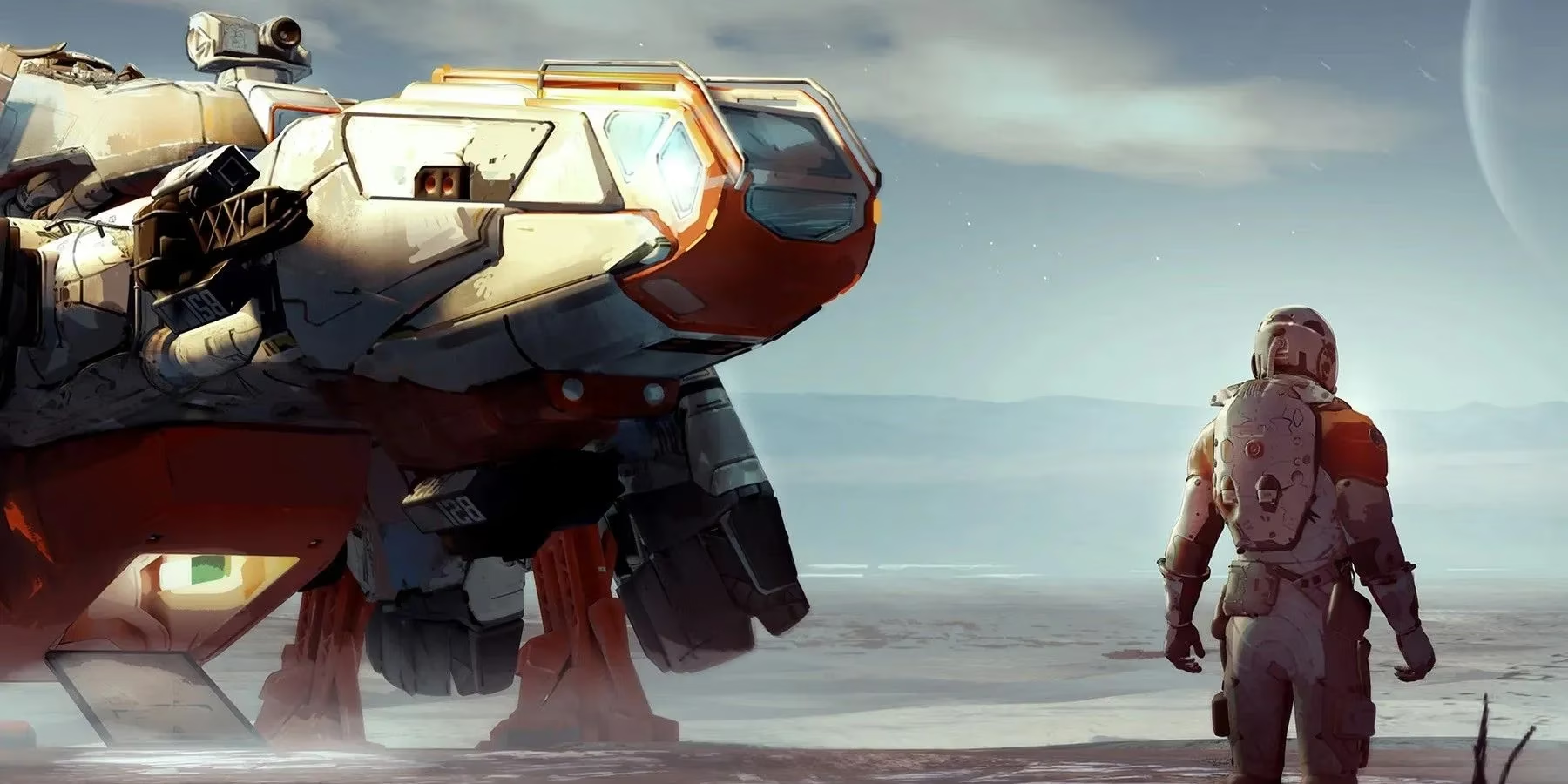
The setup is a triptych of devotion, each frame a window into a different universe. For Starfield, the diorama captures a moment of isolation: a spacesuited figure stands before a rocky alien landscape, the game’s steelbook case nestled against the backdrop like a relic. The scene feels as if someone bottled the silence of a thousand unexplored moons. Skyrim’s slice offers a more rustic warmth, an archer poised on a cobblestone path, a shop wagon and tall trees layered behind them, the PC disc cover serving as an anchor to nostalgia. And then there’s Night City, depicted under a perpetual neon rain, a Cyberpunk 2077 character cutout set against a glowing urban sprawl with a car printout zooming through the foreground. The dioramas even integrate HUD elements from the games, those tiny interface ghosts that give each piece a stolen heartbeat.
What makes these creations resonate so strongly in 2026 is how they function as emotional time capsules. The gaming landscape has shifted since Starfield first blasted off in 2023, yet rykker’s diorama has aged like a photograph developed in slow motion; it now carries the weight of all the community expeditions, the player-built outposts, and the expansion content that later deepened its cosmos. Similarly, Skyrim’s diorama acts as a stubborn monument to a game that, even after fifteen years, refuses to be archived. It’s the gaming equivalent of a well-worn leather journal on a shelf, always ready for another adventure. And Cyberpunk 2077, which underwent a phoenix-like rebirth following its Phantom Liberty expansion, now enjoys a reverence that the diorama perfectly encapsulates, freezing Night City in a perpetual state of rainy beauty, long after its roughest patches dried out.
On social platforms, the response to rykker’s work has been a cascade of admiration. Fellow fans frequently suggest adding LED lighting to turn the layered scenes into living dioramas, each stratum glowing like a fossilized dream. Others inquire about purchasing custom versions, a testament to the enduring appetite for handcrafted tributes in a market flooded with mass-produced merchandise. The comment sections read like a modern campfire circle, where strangers bond over the shared memory of a dragon shout echoing off a mountain, a revolver’s crack in a dark alley, or the hum of a ship’s gravity drive spooling up.
Behind these three frames lies a deeper narrative about how we archive play. In 2026, with emergent AI companions and procedurally generated quests becoming standard, rykker’s analog craftsmanship offers a gentle rebellion, a return to the joy of cutting paper, arranging light, and curating a single, unrepeatable moment. It’s as if each diorama is a haiku written with scissors and glue, capturing the essence of hundreds of hours of gameplay in a few square inches.
RPG fans, by their nature, are connoisseurs of worlds. Starfield’s vast emptiness, Skyrim’s cozy taverns, and Cyberpunk 2077’s dystopian streets provide distinct flavors of escapism. The diversity of these genres ensures that such fan creations will continue to sprout like resilient wildflower patches in a digital desert. Already, 2026 has seen a surge in physical art exhibits within gaming conventions, where dioramas bridge the gap between virtual and tactile, allowing spectators to peer into fictional realities as if examining a butterfly pinned under glass.
Looking ahead, it’s entirely possible that rykker’s work will inspire a new wave of creators to document their favorite 2025 and 2026 titles in similar fashion. As games evolve, so does the community’s desire to hold them. The dioramas are not just tributes to Starfield, Skyrim, and Cyberpunk 2077; they’re proof that even in a hyper-connected age, the human need to build tiny, perfect worlds has not been lost. It has simply found new canvases, sometimes framed in wood and glass, sometimes glowing with the quiet promise of an LED light strip waiting to be installed.
Expert commentary is drawn from CNET - Gaming, whose reporting on how display tech, lighting, and DIY accessories intersect with play culture helps explain why rykker’s framed dioramas resonate in 2026: they’re not just nostalgia pieces, but carefully staged “hardware” for memory—where layered prints, glass reflections, and potential LED upgrades turn Starfield’s solitude, Skyrim’s rustic road, and Cyberpunk 2077’s neon rain into tactile scenes that feel as curated as any modern setup.