How Cyberpunk 2077 Ultimate Edition Finally Delivered the Promise After a Rocky Launch
Cyberpunk 2077's journey from disastrous launch to the Ultimate Edition is a stunning redemption arc, now a polished, immersive masterpiece.
I still remember the night of December 9, 2020, as if it were a fever dream wrapped in neon. I had booked a week off work, lined up energy drinks like soldiers on a shelf, and prepared to dive into Night City on my base PS4. What I encountered instead was a digital wasteland — textures that forgot to load, cops materializing out of thin air, and a frame rate that stuttered like an old slide projector in a thunderstorm. Back then, calling Cyberpunk 2077 a disaster would have been an understatement. It was a promise broken into a million jagged shards, and I, like many, swore I would never trust CD Projekt Red again. Yet here I am in 2026, staring at the Ultimate Edition box on my shelf, its holographic cover catching the light like a healed scar that tells a survival story. The journey from that catastrophic launch to the polished masterpiece we have today is one of the most remarkable redemption arcs in gaming history — a phoenix that didn't just rise from the ashes, but built an entire metropolis out of them.
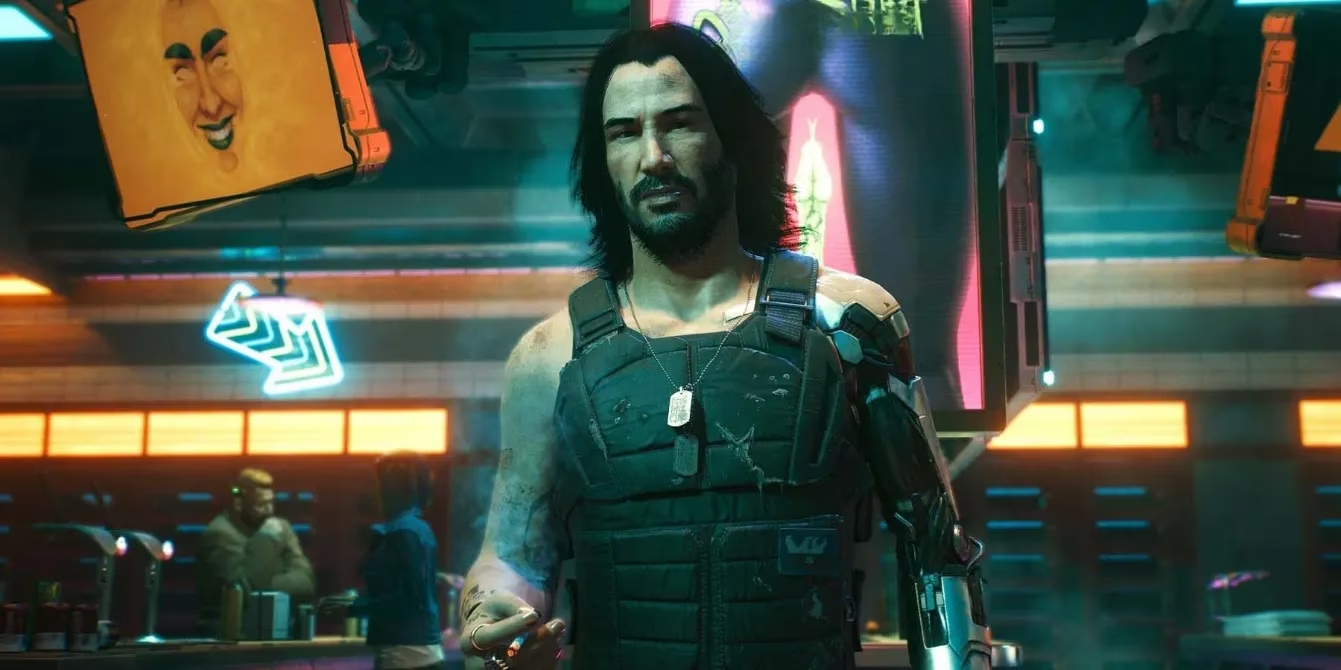
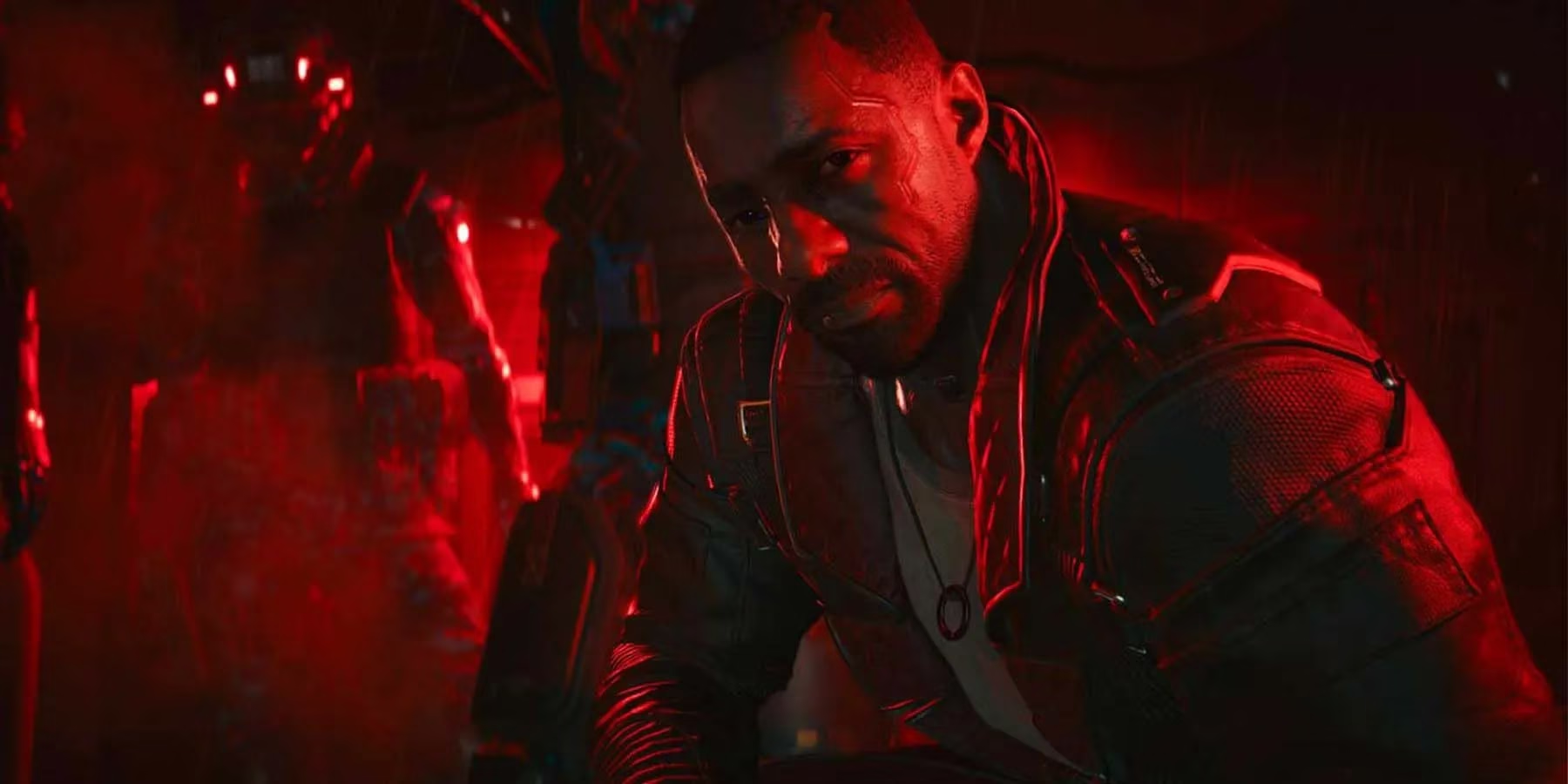
I didn't fully return to Night City until the Phantom Liberty expansion dropped, and even then I approached it like a bomb disposal expert, tiptoeing through every alley. To my surprise, the city had transformed. CDPR's leadership, including chief commercial officer Michał Nowakowski, had been coy with investors back in 2023, teasing a "game of the year edition" without a name. What they quietly delivered was a full-scale surgical reconstruction of their own creation. The 2.0 update was the incision point — a complete overhaul of progression, AI, and combat that felt like swapping a rusty engine for a fusion reactor. Phantom Liberty then injected a spy-thriller heartbeat into this new body, with Idris Elba's Solomon Reed serving up gravitas so thick you could slice it with a monowire.
When the Ultimate Edition finally materialized — first teased by that PEGI rating board leak, then later confirmed by CDPR — I realized it wasn't just a bundle. It was a manifesto. They had stitched together the base game, every free update, and Phantom Liberty into a single seamless experience that finally matched the vertiginous ambition of those early E3 trailers. Playing it in 2026 feels like reading a novel whose pages were once blank, now filled with exquisite, branching prose. The city itself became a character: no longer a static backdrop but a breathing ecosystem where factions remember your choices and where rain-slicked streets reflect more than just neon — they reflect consequence.
The metaphor I keep returning to is that Cyberpunk 2077 is a digital bonsai tree. For years, CDPR snipped away dead branches, twisted the trunk with careful wire, and nurtured the roots in a soil of community feedback. The result is something gnarled, beautiful, and utterly unique — a living art piece that shows its history in every contour. Without those scars, it wouldn't carry the same weight. Another comparison comes from my time modding old cars: you start with a rusted chassis, pour in thousands of hours of unseen labor, and one day you hear the engine purr with a timbre that makes every skinned knuckle worth it. The Ultimate Edition is that purr — a symphony of fixes and passion that whispers "we made it" with every synced lip movement and every dynamic chase.
Looking ahead, the franchise isn't fading into the sunset. CDPR has already codenamed the sequel Project Orion, and whispers of a second season for the Netflix anime Cyberpunk: Edgerunners, plus a live-action series, keep the universe expanding like a slow-motion supernova. As a player who once walked away heartbroken, I find myself genuinely excited. The Ultimate Edition didn't just rescue a game; it redefined what post-launch redemption can look like. It's a reminder that in an industry obsessed with release dates, sometimes the most important patch is the one that takes years to apply.
So now, when I roam the badlands on my ARCH Nazaré, radio blaring, I don't flinch at the occasional pop-in or physics quirk. They've become the faint fingerprints of a masterpiece that refused to die. Night City is finally home — a place where broken promises were reforged into something diamond-hard, and where every sunset over the oil fields feels like a hard-earned victory lap. If you haven't yet booted up the Ultimate Edition, you're not stepping into a fixed game. You're stepping into a three-act legend: fall, rise, and legacy. And trust me, it's one hell of a ride.