Max Level Changes in Cyberpunk 2077 Update 2.0 and Phantom Liberty
Cyberpunk 2077 Update 2.0 and Phantom Liberty raise the level cap to 60, unlocking powerful attribute synergies.
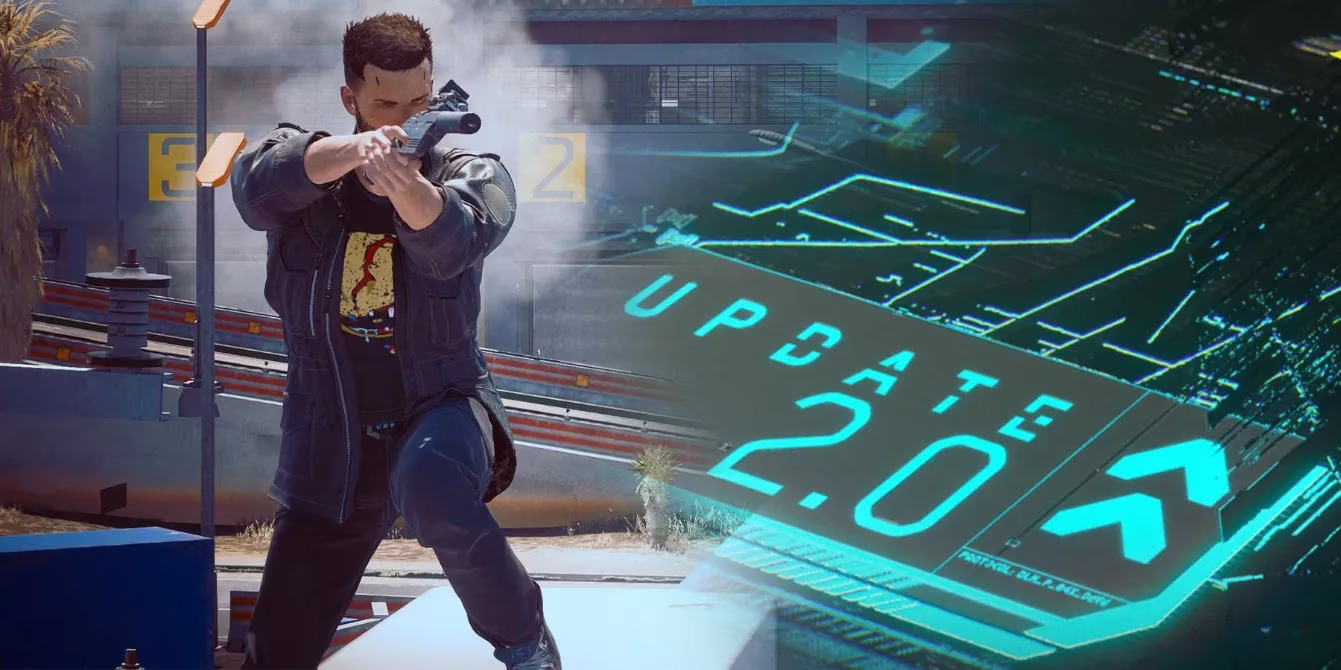
Since its troubled launch, CD Projekt RED has been relentlessly refining Cyberpunk 2077, and the arrival of Update 2.0 in 2023 truly marked a renaissance for Night City. The developer left no detail untouched, overhauling core mechanics to deliver the definitive cyberpunk experience. Among the many transformations, one of the most impactful for dedicated mercenaries was the revision of the level cap and the attribute system, which directly influence how players build their version of V. With the standalone expansion Phantom Liberty pushing boundaries even further, understanding the progression ceiling has become essential for anyone shaping the ultimate edgerunner.

The Core Level Cap in Update 2.0
When Update 2.0 rolled out, the base game of Cyberpunk 2077 retained the familiar maximum level of 50. While that number itself did not climb from the original release, the journey to reach it became fresh and rewarding thanks to a completely revamped skill system. Every level-up continued to grant a precious Attribute Point, allowing players to distribute their growth across the five core attributes: Body, Cool, Intelligence, Reflexes, and Technical Ability. The progression from level 1 to 50 was now intertwined with redesigned perk trees, encouraging experimentation rather than linear specialization. Experience could be gathered through an endless variety of activities—gigs, main missions, side jobs, and scanner hustles—ensuring that the path to the level cap felt organic for any playstyle.
Breaking the Ceiling: Phantom Liberty’s Level 60
The true vertical expansion came with Cyberpunk 2077: Phantom Liberty, the spy-thriller expansion that raised the absolute max level to 60. Securing those 10 additional levels means acquiring 10 extra Attribute Points, a seemingly modest number that can fundamentally alter a character’s potential. In the intricate web of cybernetic warfare and netrunning, those points unlock gateways to the highest-tier abilities. A mercenary who previously had to compromise between hacking expertise and close-quarters brutality can now comfortably push three attributes toward their individual cap of 20. This expanded ceiling not only rewards completionists who scour Dogtown for every secret, but also invites creative multi-archetype builds that simply were not viable before.
The Power of Max-Level Attributes
Reaching the limit in any of the five attributes confers distinctive advantages that go far beyond raw numbers. A full investment in Intelligence transforms the player into a ghost in the machine, unlocking unique dialogue options that alter quest outcomes and provide deeper narrative context during important conversations. Reflexes at peak performance not only boosts critical hit chances and mobility, but also introduces exclusive options during adrenaline-pumping quick-time events, turning V into an untouchable cybersamurai. Body delivers the brute force required to rip open heavy doors and intimidate enemies, while Technical Ability enables the most sophisticated hacking mini-games and access to restricted areas through control panels. For many players, the strongest combination lies in raising both Body and Technical Ability to 20, guaranteeing that no physical or digital barrier remains closed. However, with only a finite pool of points, every choice shapes the legend of Night City.
The One-Time Reset: A Tactical Opportunity
One of the most celebrated changes in Update 2.0 is the ability to respec attribute points—but only once, and with clear boundaries. After applying the reset, V’s attributes revert to the base 15 points that were allocated during character creation. No attribute can drop below a foundational level of 3, which means it is impossible to redistribute points in a way that leaves any stat completely empty. This prevents a scenario where a player could temporarily exploit the system to put 20 points into every attribute, preserving the integrity of build identity. The single respec serves as a lifeline for those who want to pivot from a pure netrunner to a gorilla-armed brawler without starting an entirely new game. As such, the decision demands careful planning—once it is gone, the only way to drastically rework a build is to begin a fresh journey through the neon-drenched streets.
Looking Ahead in 2026
Three years after its landmark overhaul, Cyberpunk 2077 stands as a testament to persistent redevelopment. The level cap structure set by Update 2.0 and Phantom Liberty remains the backbone of character progression, and even in 2026, players continue to mine the depths of possibility within these constraints. Buildcrafting communities have mapped out dozens of optimized templates, from stealth assassins who barely trigger a whisper to shotgun-wielding juggernauts that laugh off explosions. The interplay between the 60-level ceiling and the finely tuned attribute thresholds ensures that no one build can dominate universally, keeping the single-player experience vibrant and deeply personal. Whether a mercenary chases the thrill of unlocking every perk or simply wants to create a version of V that feels uniquely theirs, the systems established by these updates continue to define what it means to survive and thrive in the dark future.