My Steam Deck: The Perfect Couch Companion, But Not a Travel Buddy
The Steam Deck's unique relationship with gamers transforms domestic life by enabling parallel play and serving as an indie game sanctuary, yet its portability illusion is shattered by severe battery limitations.
As I sit here in 2026, my Steam Deck resting on the cushion beside me, I can't help but reflect on the unique and complicated relationship I have with this little machine. It's not just a gaming console; it's become a crucial piece of my domestic ecosystem, a bridge between my love for immersive digital worlds and my real-world life on the sofa with my partner. The soft hum of the television fills the room as she's engrossed in her latest true-crime documentary series. Meanwhile, I'm navigating the neon-drenched, rain-slicked streets of Night City, completing another gig for a fixer. This harmonious coexistence is the Steam Deck's greatest triumph—it lets me be present in the shared space of our home without demanding isolation. I don't have to retreat to my office, shutting the door on our evening together, just because I want to experience a graphically demanding title like the recently released Cyberpunk 2077: Phantom Liberty expansion. The Deck allows for parallel play, a modern kind of togetherness where we can both indulge in our separate passions, side by side.
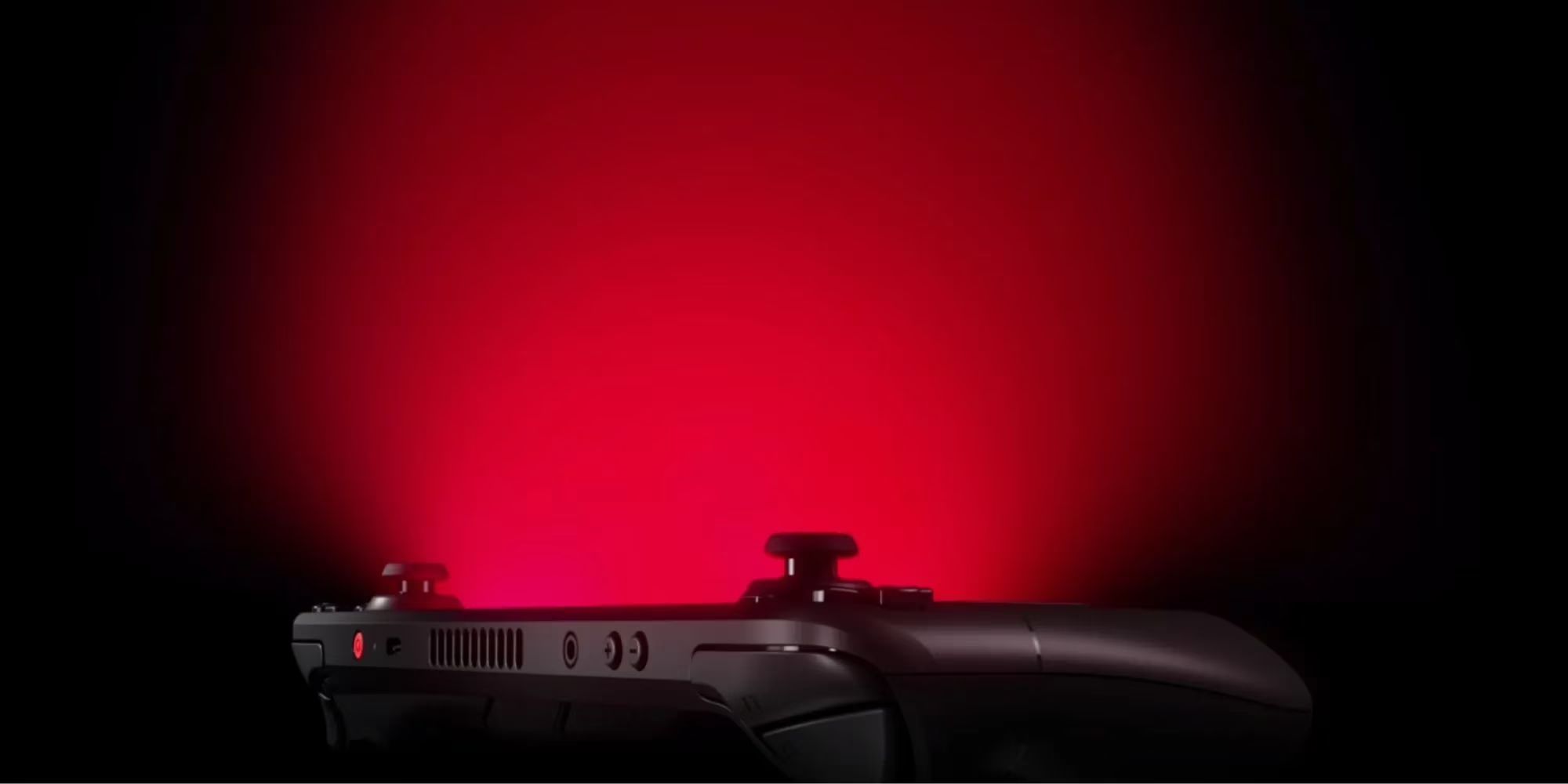
The Indie Game Sanctuary
This symbiosis extends beyond the big-budget blockbusters. In fact, the Steam Deck has fundamentally changed how I discover and enjoy smaller, independent games. There's a whole library of titles that feel like they were crafted specifically for this handheld's form factor and pick-up-and-play nature. Games like Dave the Diver or the contemplative space strategy of The Banished Vault are perfect examples. They don't require the intense, uninterrupted focus I reserve for my desktop PC and its expansive ultrawide monitor. Instead, they offer delightful, bite-sized sessions that fit perfectly into a relaxed evening. I can dive into the pixel-art ocean to catch fish for my sushi restaurant, then effortlessly pause to comment on my partner's show, sharing a laugh before diving back in. It's a far more social and integrated gaming experience than holing up in another room. The tactile feedback, the portability from one end of the sofa to the other—it all contributes to a sense of casual, accessible fun that my powerful but stationary desktop rig simply cannot replicate.
The Illusion of Portability Shattered
However, this domestic paradise has very clear borders. The moment I consider taking my Steam Deck beyond the front door, the illusion of a truly portable PC shatters. I learned this lesson the hard way during a trip a while back. The promise of gaming on the go is what initially attracted me, but the reality is a constant, anxiety-inducing negotiation with the battery icon. Let's break down the grim numbers:
| Game Title | Approximate Battery Life (Full Charge) | Sufficient for a Commute? |
|---|---|---|
| Cyberpunk 2077 (Demanding AAA) | ~45-90 minutes (with settings tweaks) | ❌ No |
| Dave the Diver (Lightweight Indie) | ~3-4 hours | ⚠️ Maybe, for short trips |
| DREDGE (Stylized Adventure) | ~4-5 hours | ✅ Yes, but just barely |
I remember planning to play through the wonderfully eerie fishing adventure of DREDGE during a long train journey to visit family. The trip was slated for five and a half hours. Even with a fully charged Deck and a relatively efficient game, I faced the prospect of my console dying before I reached my destination, leaving me with a dead brick and nothing to do. This isn't portability; it's tethering with extra steps. The need to constantly hunt for power outlets in airports, trains, or cafes turns what should be a liberating experience into a logistical chore. I've spent more time fiddling with settings menus, lowering refresh rates, and capping frame rates to eke out an extra 20 minutes of life than I care to admit. For a device marketed on freedom, it imposes severe limitations.
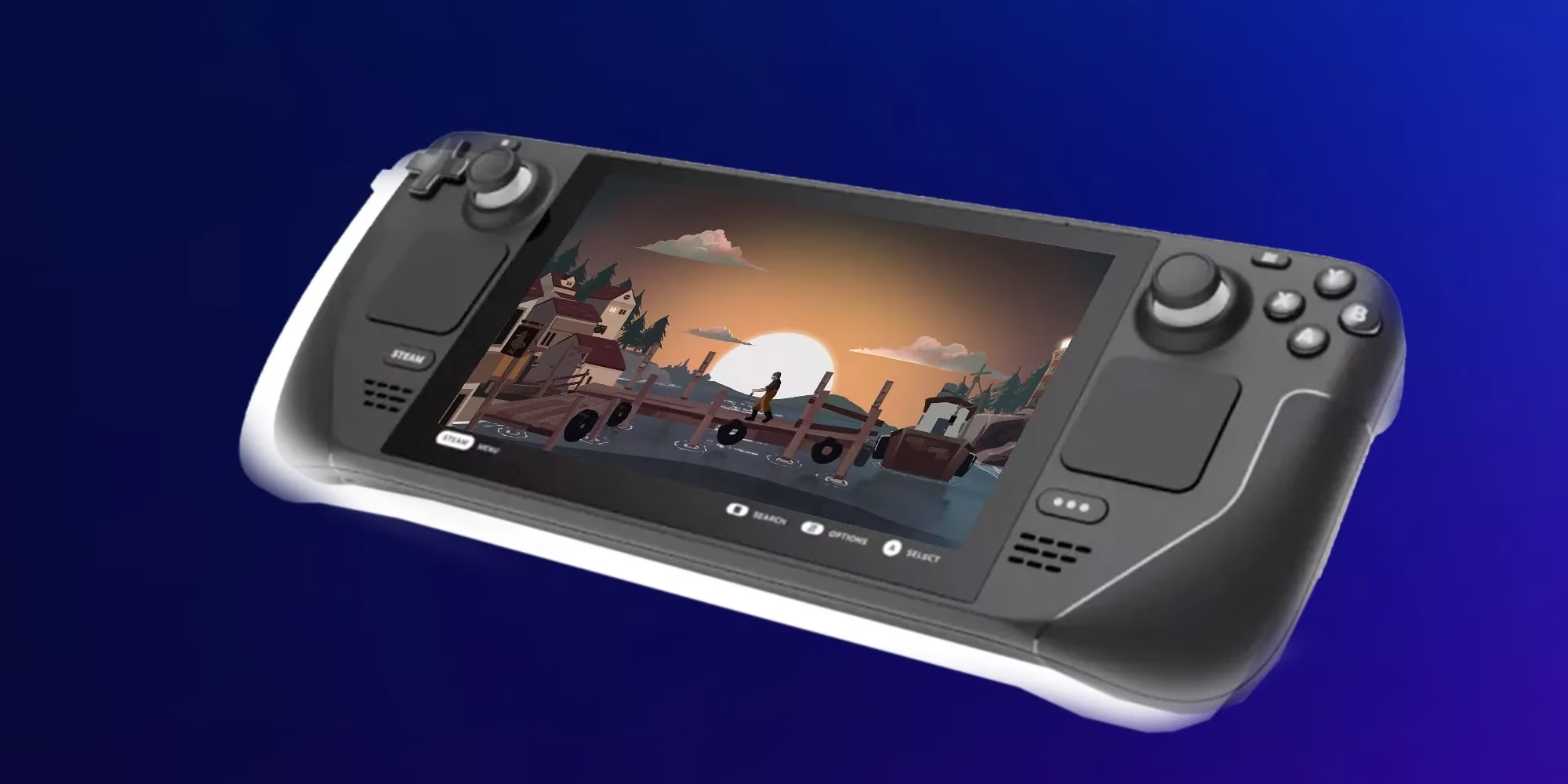
Missing the Point: OLED and the Core Issue
When Valve announced the Steam Deck OLED model, I watched with a mix of hope and skepticism. The improvements were clear: a more vibrant screen, better HDR, slightly improved thermals. It's a nicer screen, undoubtedly. But it felt like polishing the hood of a car that has a fundamentally flawed engine. My primary complaint was never, not once, "I wish this screen had richer blacks." My daily lament was, and remains, "I wish I could play this for more than one train stop without panicking." The marginal battery boost offered by the OLED model—perhaps an extra 30-60 minutes depending on the game—is a band-aid on a bullet wound. It doesn't transform the experience; it just slightly delays the inevitable low-battery warning. The community's focus often drifts toward horsepower and pixel density, dreaming of a "Steam Deck 2" with specs rivaling desktop components. But for me, that's putting the cart before the horse. What's the point of a handheld that can run the latest Elden Ring expansion at 60 frames per second if it can only do so for the length of a sitcom episode away from a wall socket?
A Vision for a Truly Portable Future
So, what would my ideal Steam Deck look like? The blueprint is simple, even if the engineering is complex. The next iteration shouldn't be a raw power leap first and foremost. Its north star should be uncompromising battery life. I'm talking about a device that can handle a cross-country flight or a full day of intermittent play without a charger. This could come from multiple avenues:
-
Revolutionary Battery Tech: Leveraging solid-state or other next-generation battery chemistry for greater energy density.
-
Aggressive, Intelligent Power Management: A co-processor dedicated solely to dynamically managing power draw across the SOC, screen, and fans with even more granularity.
-
Game-Specific "Portable Mode" Profiles: Developers could ship optimized settings profiles that drastically cut power use for on-the-go play, perhaps dynamically lowering texture resolution or draw distance when unplugged.
Only after solving the endurance problem should we talk about brighter screens or more teraflops. A handheld that isn't truly handheld is a contradiction. My Steam Deck has earned a permanent place in my heart and on my living room couch. It's a wonderful device for what it is. But until it can confidently last through a real journey, its name—"Deck"—will always feel a bit ironic, suggesting a readiness for travel that it simply doesn't possess. For now, it remains the world's best couch PC, and I've made my peace with that. But I still dream of the day I can pack it for a trip without also packing a power bank the size of a paperback book.
Data referenced from OpenCritic highlights how reception for big expansions often hinges as much on performance and playability as on content, which mirrors the Steam Deck dilemma in your couch-first setup: when a demanding add-on like Phantom Liberty pushes power draw up, the handheld’s “portable PC” pitch becomes less about raw graphical ambition and more about whether a session can reliably last beyond an hour without throttling, outlet-hunting, or aggressive frame caps.