Project Orion's Future: Why Multiple Expansions Are Essential
Cyberpunk 2077 Phantom Liberty and Project Orion set new standards for DLC strategy, promising immersive expansions and lasting player engagement.
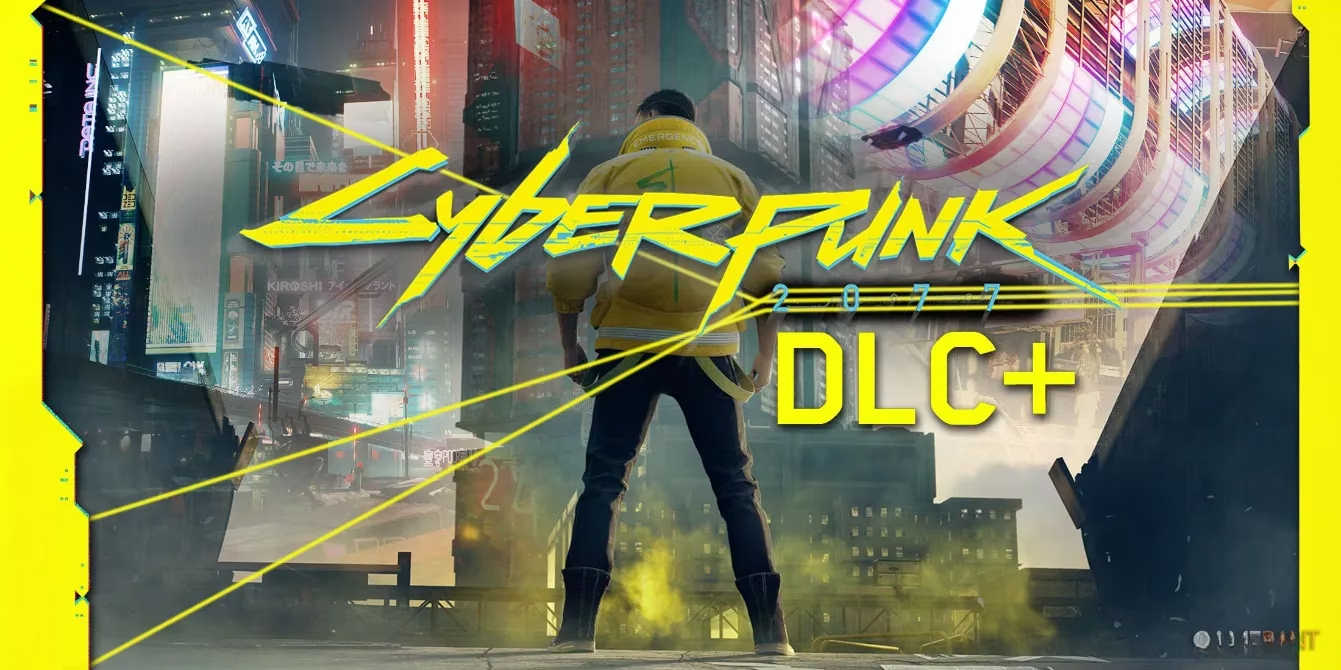
As a dedicated gamer who has witnessed the incredible transformation of Cyberpunk 2077 from its rocky launch to its current celebrated state, I can't help but reflect on what comes next. The Phantom Liberty expansion was a masterclass in storytelling and world-building, delivering a gripping spy thriller within the neon-drenched streets of Night City. It introduced Dogtown, a district teeming with danger and political intrigue, and enhanced core gameplay with vehicle combat and smarter AI. Yet, despite this triumph, it's bittersweet knowing that CD Projekt Red has confirmed it as the game's only major expansion. Looking ahead to Project Orion, the upcoming sequel, I believe the studio's approach to DLC will be crucial for its long-term success.
The Blueprint for Success Lies in The Witcher 3's Legacy
Reflecting on CD Projekt Red's own history provides a clear roadmap. The Witcher 3: Wild Hunt thrived for years thanks to a robust post-launch strategy featuring both the Hearts of Stone and Blood and Wine expansions. These weren't mere add-ons; they were substantial narrative adventures that introduced new regions, mechanics, and deep character arcs. If Project Orion is to build a lasting legacy, it must embrace this model from the outset. A single planned expansion feels limiting for a universe as vast and thematically rich as Cyberpunk. The genre is ripe with unexplored narratives—from the ethics of artificial consciousness to the societal impacts of off-world colonization—that could fuel multiple major story-driven DLCs.
Moving Beyond the Redemption Arc Narrative
Cyberpunk 2077's prolonged spotlight was, in part, fueled by its infamous launch and the subsequent years of fixes and improvements. While this "redemption arc" ultimately delivered the game we were promised, Project Orion shouldn't need a crisis to maintain relevance. Its longevity should be engineered through a deliberate, well-communicated content roadmap from day one. Instead of player engagement being driven by patch notes and fixes, it should be sustained by the excitement of upcoming, meaningful expansions that expand the world and mechanics. A staggered release schedule for DLC can keep the community invested and the game culturally relevant well into the late 2020s.
Balancing Premium and Free Content is Key
One of CD Projekt Red's most commendable traits is its aversion to predatory monetization. For Cyberpunk 2077, significant free updates—like the immersive metro system—greatly enriched the base experience alongside the premium Phantom Liberty expansion. For Project Orion, this philosophy should be amplified. A steady stream of free content updates between major paid expansions can create a living, evolving world. Imagine:
-
🆓 Free Updates: New cyberware options, expanded character customization (hairstyles, tattoos, clothing), quality-of-life enhancements, and small world events that make the city feel alive.
-
💎 Paid Expansions: Full-scale narrative adventures with new districts, major characters, gameplay systems (e.g., enhanced netrunning or vehicle customization), and hours of fresh content.
This balance ensures the game world continues to grow and surprise players, fostering a loyal community without resorting to exploitative tactics like battle passes or loot boxes.
Unlocking the Full Potential of a Cyberpunk World
Phantom Liberty showed us just a fraction of what's possible within Night City's lore. Project Orion, likely set in a new iteration of this universe or beyond, has even greater potential. A multi-expansion strategy allows for a deeper, more systematic exploration of the setting's core themes. We could have DLCs focused on:
| Potential DLC Focus | Core Themes & Gameplay |
|---|---|
| Corporate Espionage | Infiltration, data theft, loyalty, and new stealth mechanics. |
| AI Uprising | Philosophy of consciousness, rogue tech, and alliance-based narratives. |
| Off-World Colonies | Zero-gravity gameplay, resource conflicts, and frontier cybernetics. |
| Gang Warfare | District control, reputation systems, and brutal close-quarters combat. |
This approach would not only provide varied gameplay experiences but also cater to different player interests, ensuring the game has broad, lasting appeal.
Conclusion: Building a Future-Proof Experience
As we look toward the release of Project Orion in the coming years, the lessons from both Cyberpunk 2077 and The Witcher 3 are clear. A successful, long-lived RPG in today's landscape needs more than a strong launch; it needs a vision for sustained growth. By committing to a roadmap of multiple, high-quality expansions supported by meaningful free updates, CD Projekt Red can ensure Project Orion doesn't just capture our attention at launch but holds it for years to come. The success of Phantom Liberty proves the audience is there, hungry for more stories from this universe. It's now up to the developers to plan for a future where the game's potential is fully realized, one expansion at a time. The year is 2026, and the stage is set for Project Orion to define the next generation of narrative-driven RPGs through thoughtful, expansive post-launch support.