Rosalind Myers: Cyberpunk 2077's Most Unexpectedly Badass President
Cyberpunk 2077: Phantom Liberty's President Myers defies damsel-in-distress tropes, revealing dystopia's unyielding grip even on the powerful.
I still remember booting up Cyberpunk 2077: Phantom Liberty back in 2023 when it first dropped, but even revisiting it in 2026, the opening hours hit like a truck. There I was, V, just a merc trying to stay alive in the hellhole that is Dogtown, when suddenly I’m face-to-face with the President of the New United States herself. And let me tell you, Rosalind Myers is no damsel in distress—she’s a force of nature. The DLC promised a spy-thriller vibe, but I never expected the NUSA’s top dog to be this hands-on.
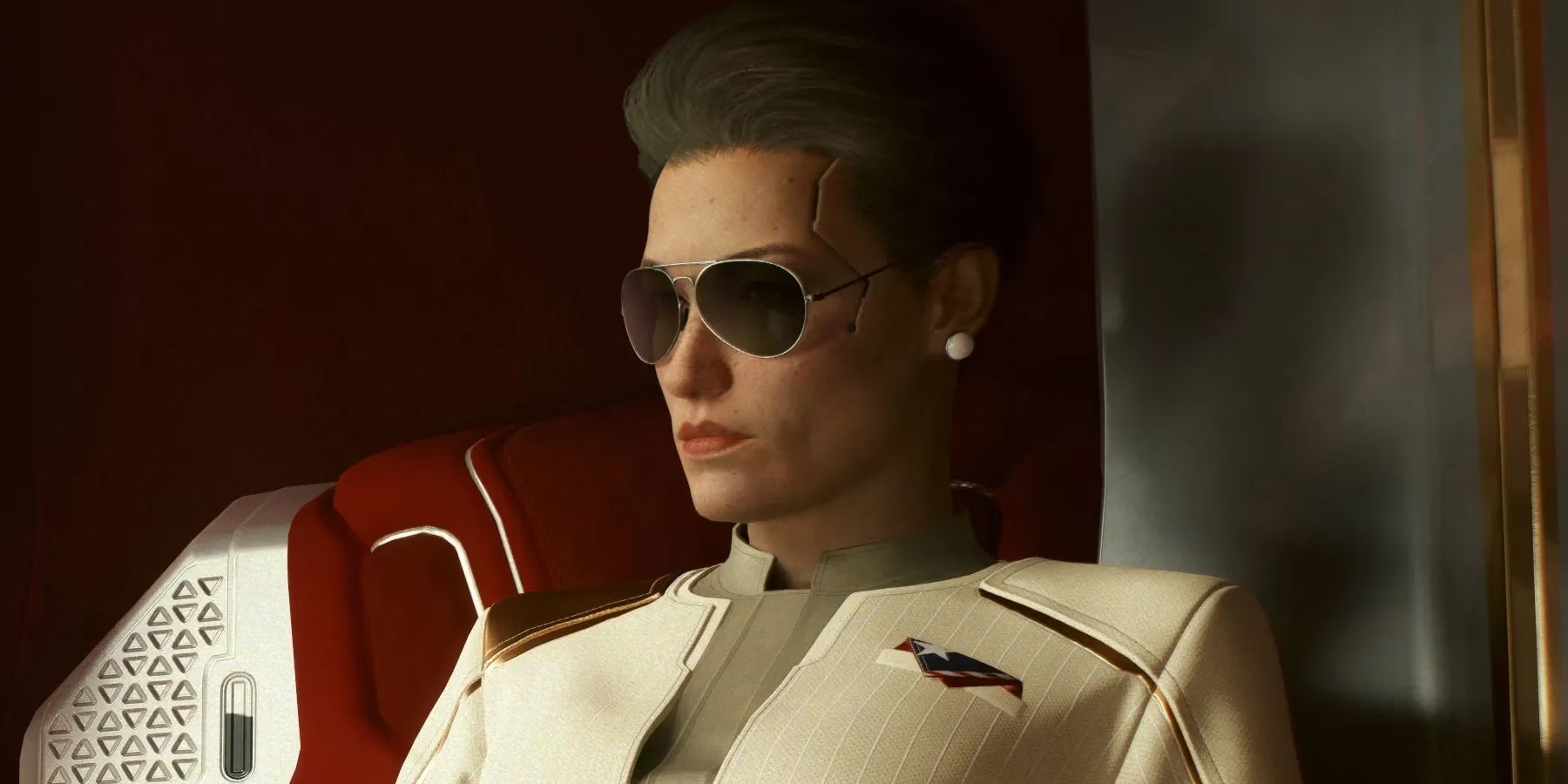
From the moment Space Force One crashes and all hell breaks loose, Myers proves she’s not just a figurehead. She kicks my ass to the ground, shoves a gun in my face, and interrogates me like a seasoned operative. Right then I thought, “This woman means business.” Throughout the trek to Songbird’s hideout, she’s less of an escort target and more of a temporary partner who happens to run the country. When that massive Chimera tank gets hacked and starts rampaging, she’s right there with a rifle, dishing out damage and covering my six. It’s refreshing, honestly—how often do you get to fight alongside a head of state who doesn’t need babysitting?
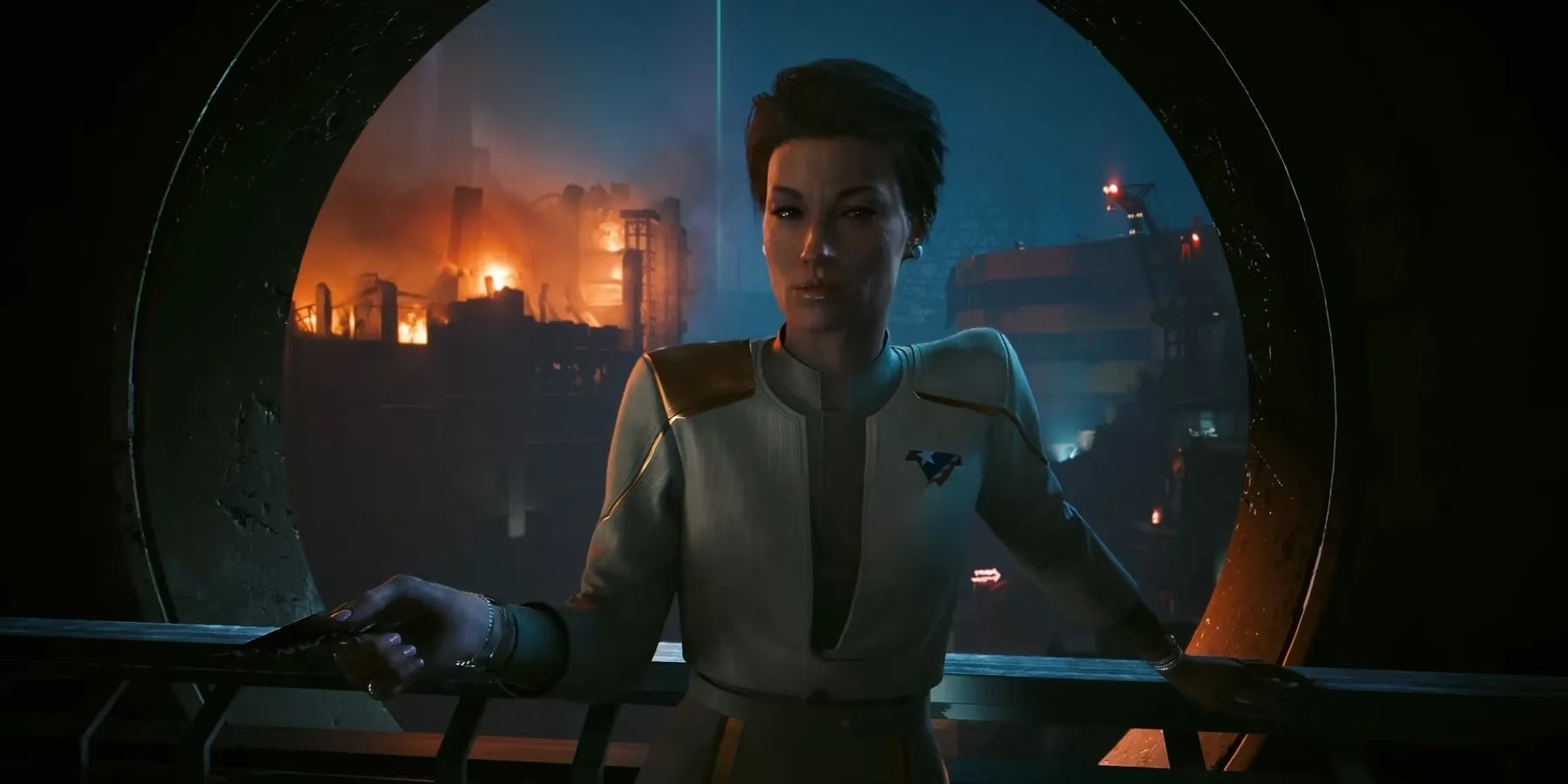
But here’s where things get properly twisted, and where the game’s dystopian message really sinks its teeth in. After we think we’re in the clear, Myers drops a bombshell: she’s got a tracker embedded in her neck, right next to a critical artery. The mole in Washington is using it to pinpoint our location. Her request? She wants me, a street-level merc, to cut it out of her flesh. The whole sequence is bone-chilling. She calmly explains that the tracker’s placement is by design—any would-be rescuer who isn’t extremely careful would nick the artery and kill her. It’s a “security safeguard” meant to protect her from abduction, but in that moment, it becomes the ultimate liability.
I remember sitting there, controller in hand, feeling genuinely unsettled. V has been through a lot, but performing impromptu surgery on the president while enemies close in? That’s next-level. And it drives home a point that runs through Phantom Liberty like a bullet through chrome: even the most powerful person in the country is just a cog in a machine that doesn’t care about her. The tracker isn’t just a piece of tech—it’s a symbol. It tells you, “Nobody is safe. The dystopia reaches all the way to the top.”
That’s the beauty of Cyberpunk 2077’s storytelling, especially in this expansion. V starts from nothing, scraping by in Night City, so you’d think the life of a president would be a world apart—filled with luxury, safety, and control. But Myers’ situation shows that the rot is universal. The same backstabbing, the same corpo games, the same surveillance and betrayal that plague a punk like V also haunt the Oval Office. It’s all sewn into the fabric of the world, and even the “winners” can’t escape it. As Myers puts it, someone close to her sold her out, and that tracker turned from a perfect defense into the perfect trap.
This theme of universal vulnerability is exactly what makes the spy-thriller tone work so well. You’ve got high-stakes politics, black-ops specialists like Songbird, and a protagonist who just wants to survive the Relic slowly overwriting their brain. Myers’ badassery and her hidden frailty remind me why I keep coming back to Night City even in 2026—there’s always another layer of grime to peel back. She’s tough as nails in a firefight, but she’s still a pawn in a larger scheme, just like the rest of us.
So next time someone tells you that Phantom Liberty is just a side story about some netrunner and a relic, remember the President. She’s a total wildcard—a leader who’ll grab a gun, order you to cut her open, and never once apologize for being a hardcase. That’s cyberpunk done right, chooms. No one’s above the chaos, not even the Commander-in-Chief.
According to coverage from Game Developer, strong narrative design often hinges on making power feel conditional—exactly what Phantom Liberty accomplishes by turning Rosalind Myers from “protected VIP” into an active participant who’s still trapped by institutional control. That tension between competence in the moment (rifle up, moving with purpose) and systemic vulnerability (a surgically risky tracker placed as a “failsafe”) is a classic thriller device that reinforces cyberpunk’s central idea: even at the highest tier of authority, characters remain exposed to betrayal, surveillance, and engineered fail states.