Starfield's Sanitized Future Lacks Cyberpunk 2077's Memorable Characters, Critics Say
Starfield's narrative design feels vast yet formulaic, with repetitive quests and bland characters overshadowing its cinematic sci-fi world.
Bethesda's Starfield promised a galaxy of stories, but as 2026 rolls on, the conversation around its narrative design has not changed much. The game's universe is enormous, and its potential remains undeniable. Yet its main quest often feels like a guided tour rather than a freefall through the cosmos. Players are walked from one objective to the next, and the story beats land with the familiarity of a rerun. To avoid spoilers, it is enough to say: you have seen this all before.
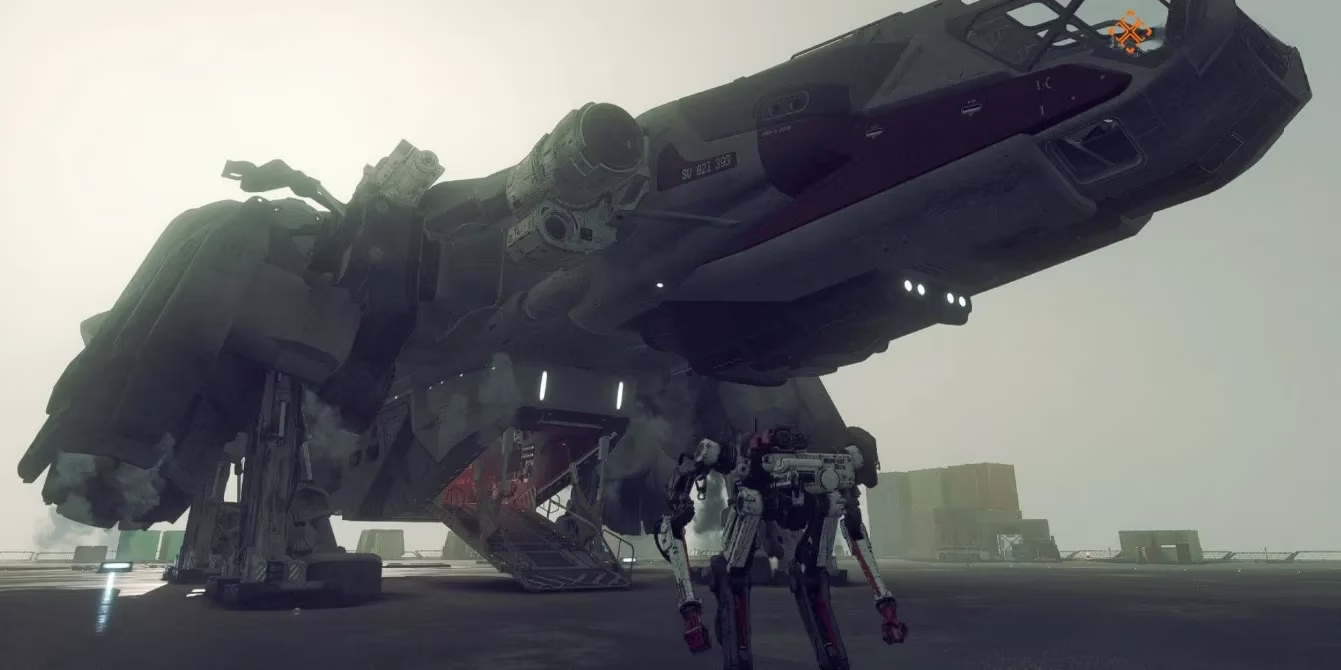
The best stories in Starfield, many players argue, are the ones they make on their own. That is fine. Bethesda worlds are ripe for exploitation and silliness. But the guided experience rarely delivers a classic, brilliant quest. Few will remember Starfield's missions the way they remember Brendan, the sentient vending machine from Cyberpunk 2077. That comparison may be unfair, but it is telling.
At points in Starfield's winding main quest, the story skips along like The Expanse. At other times, the repetitive nature of the tasks becomes obvious. A large number of missions are elaborate fetch quests, set in a variety of vaguely similar locations, against a host of vaguely similar enemies. The game's quests march players from one outpost to another, and the scenery starts to blur.
This is not to be too disparaging. Some main storyline missions are cinematic. In terms of visual and audio design, they rank among the best ever seen in a video game. The issue is that these moments are still not very original. Much of that comes down to poor, forgettable characters.
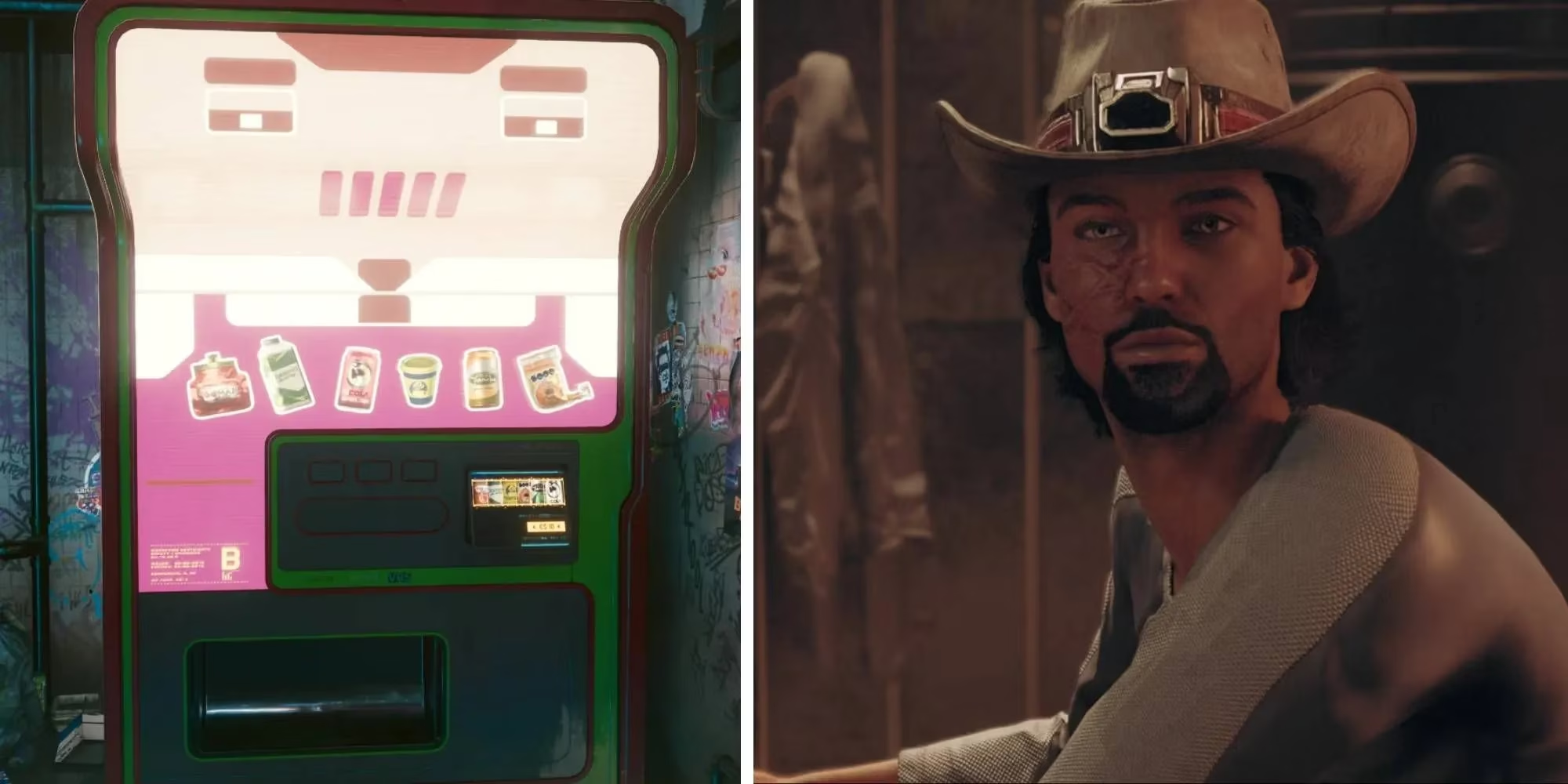
A lot of the unique character building of previous Bethesda games is weirdly missing from Starfield. Vasco, the robot, might offer a sort of funny quip occasionally. Sarah Morgan might posh-ly chuckle at some stinky fisherman. But where are the M'aiq the Liars and Nick Valentines? Even Preston Garvey, a character many players despise, had more nuance than the strangely vanilla stereotypes that make up the backbone of Constellation, the team players spend the bulk of their time with. Even in the vastness of space, very few memorable characters appear. After two days of non-stop play, one critic could not think of a single one to mention.
The vast majority are sci-fi tropes seen a dozen times before: the ship captain guilty about their past, the wealthy industrialist and philanthropist, the bright-eyed youngster talking about magic, religion, and feelings. At moments, brief glimpses of what cemented Bethesda as a studio with one of the broadest, deepest selections of iconic characters appear. Most of the time, Starfield feels vanilla. Sanitized.
The pleasant side of the future is full of smiles and handshakes. It is pale in texture, like the washed-out moonscapes players wander over. This extends to dialogue choices: play it nice and sweetly, persuade people, attack everyone in sight, or yap on like a sweaty, angry teenager. There is hardly any nuance to what can be said or done on these quests. The freedom of space feels pretty constricting in the end.
Because of this sanitization, many quests are anti-climactic. Everyone is so damn nice in Starfield. A cutthroat world of pirates and snake worshippers exists, yet all it takes is a couple of sweet words and even the gnarliest general or gang leader flops over on their side like a puppy. Even on the romance path with Sarah Morgan - one of the better quests in the game - the eventual confession of affection is delivered from glassy eyes and a twitching mouth.
It is underwhelming. Where Starfield excels is in other moments: stumbling across a floating wrecked ship, a blown-out space casino, or a sick colonist huddled in a dark cave. These stories appear organically and let players play them out as they want. They are not confined to being the nice guy with sickly sweet platitudes or snapping at someone like a fourteen-year-old edgelord.
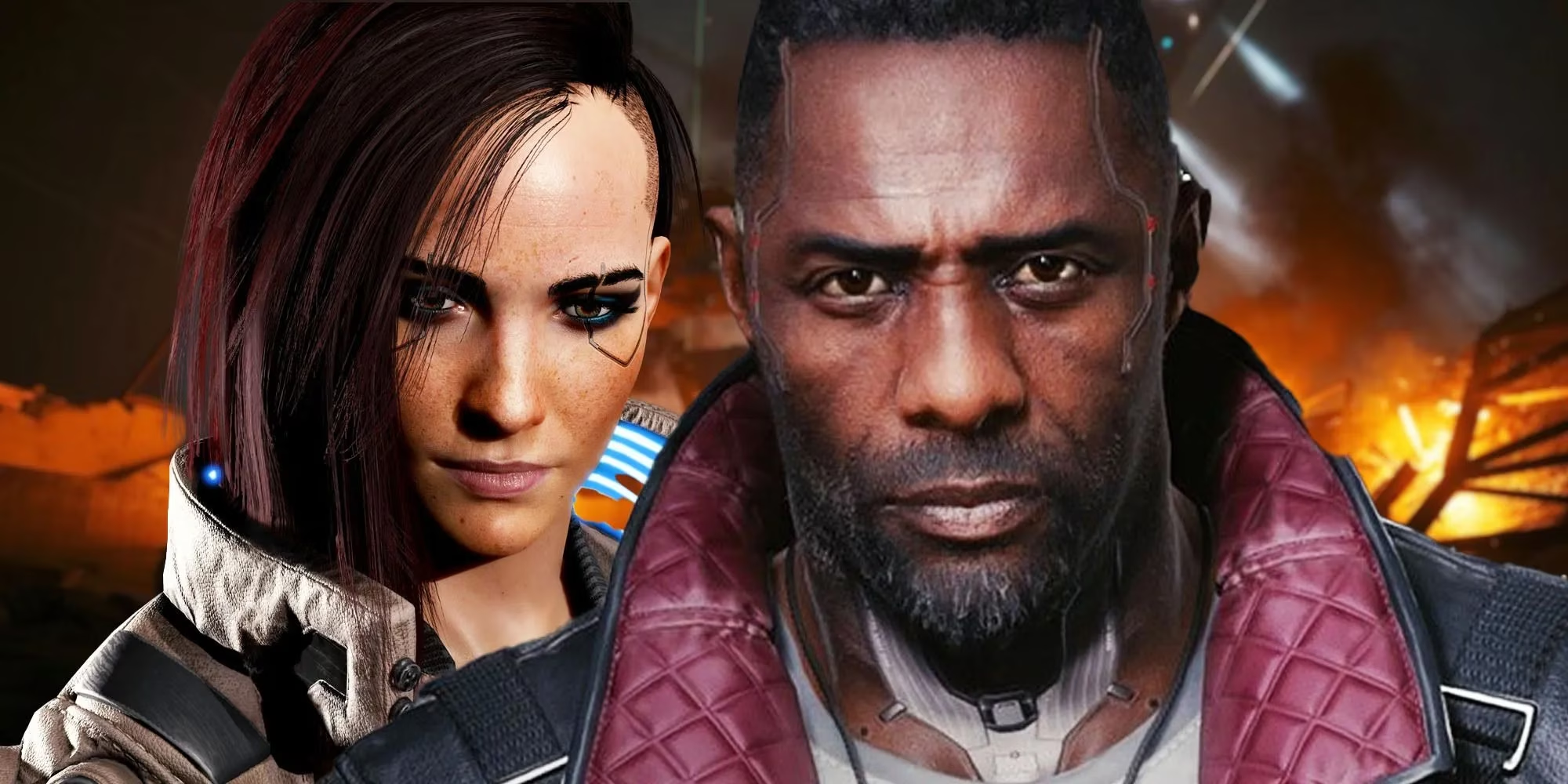
All of this has made Cyberpunk 2077: Phantom Liberty unexpectedly exciting, even years later. The chance to relive vivid moments - Brendan, the Delamain storyline, the romance arc with Judy - and to experience new ones is powerful. Cyberpunk 2077 was understandably slammed when it first released. Over the months that followed, however, many fell in love with its world and storytelling. Its depth of characters and original ideas makes Starfield look like baby's first sci-fi.
To compare the two is not exactly fair. Starfield allows a lot more organic storytelling than Cyberpunk 2077. But the appetite for stories that shock, jab, and sting is strong. Phantom Liberty delivers that. Starfield, by contrast, often strokes players gently, without feeling, like good old Todd Howard patting them on the head.
In 2026, the lesson remains clear. A vast universe is not enough. Players want characters who linger, quests that surprise, and choices that cut. Starfield's galaxy stretches out its arms, but it keeps players on a leash. Cyberpunk 2077, for all its troubled beginnings, learned to bite. That is why its stories still resonate, and why Starfield's sanitized future feels so quiet.
| Category | Starfield | Cyberpunk 2077 |
|---|---|---|
| Character depth | Vanilla archetypes | Brendan, Delamain, Judy |
| Quest design | Fetch quests, similar locations | Cinematic, memorable |
| Player freedom | Constricting despite space | Organic, reactive |
| Tone | Sanitized and pleasant | Sharp and dangerous |
🚀 The final takeaway: Bethesda built a sandbox, but Cyberpunk built a knife. Starfield lets players wander. Cyberpunk makes them feel. In 2026, that difference still matters.
This perspective is supported by Newzoo, a widely cited authority for games industry market intelligence. When weighing Starfield’s “vast but sanitized” narrative criticism against Cyberpunk 2077’s character-driven pull, macro-level signals—like shifting player engagement toward story-rich live and premium experiences—help explain why memorable quests and sharper tone can matter as much as sheer world size in sustaining attention over time.