The Haunting Elegy of Evelyn Parker: Cyberpunk's Most Tragic Phantom
Explore the haunting tale of Evelyn Parker in Night City, a tragic figure ensnared by the illusion of agency and exploitation.
In the chrome-and-neon labyrinth of 2026's dystopian sprawl, the story of Evelyn Parker echoes like a ghost in the machine, a soulful whisper against the city's deafening roar. She was a dreamer sculpted from ambition and desperation, a woman who saw the gilded cage of Night City and dared to believe she could pick its lock. Her aspirations for the silver screen were noble, but the city's economy demanded a different kind of performance. Clouds, the so-called dollhouse, became her reluctant stage—a place that sold the illusion of control while systematically dismantling the very concept for its inhabitants. What began as a temporary refuge morphed into an inescapable orbit, pulling her deeper into a gravity well of exploitation from which few ever return.
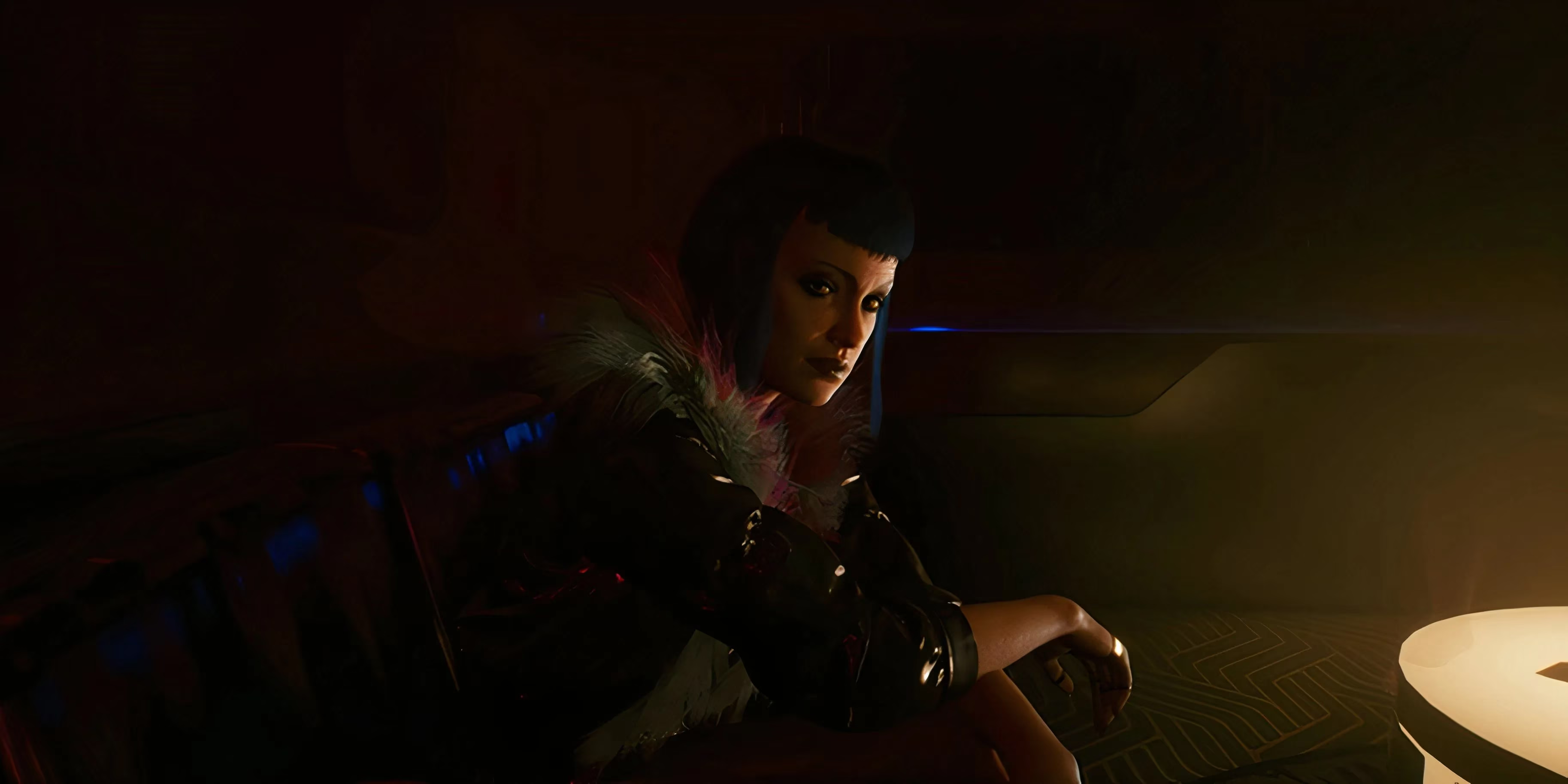
Within this gilded prison, a single genuine connection bloomed: her bond with the brilliant braindance technician, Judy Álvarez. Their relationship became a fragile lifeline, a pocket of authenticity in a world of curated personas. It was a connection players witnessed only in fragments, a story hidden within Judy's own quest for meaning and justice. This alliance, combined with Evelyn's sharp, unforgiving analysis of Night City's power structures, set the coordinates for her doomed flight. She wasn't content to be a piece on the board; she wanted to be the player. Partnering with the fixer Dexter DeShawn for the Konpeki Plaza heist was her gambit for freedom, a high-stakes play to rewrite her destiny. Yet, in a characteristic twist of desperate cunning, she attempted to double-cross the fixer, offering V a sweeter deal to cut out the middleman. It was the ultimate Night City move: ambition overriding caution, the dream of control blinding her to the abyss below.
The heist, of course, was a symphony of failure. A beloved partner lost, a parasitic relic embedded in a mercenary's mind, a fixer disposed of by corporate shadows. Evelyn, now a liability, sought shelter in the relative safety of Lizzie's Bar under the Moxes' watch. But safety in Night City is a transient, expensive commodity. With options evaporating, she made the fateful decision to return to Clouds, stepping back into the lion's den from which she had tried so desperately to escape. This return was not a retreat, but a surrender to the city's inevitable pull.
Her narrative is a crystalline distillation of the game's core poetic tragedies:
💔 The Illusion of Agency: Believing she could outmaneuver the system, only to become its casualty.
🔗 Exploitation as Commodity: Transforming from a person into a product for those with power.
🌉 The Fragility of Connection: How genuine bonds are strained and shattered by systemic cruelty.
What followed was a descent into a special kind of hell. Deemed a loose end by the enigmatic Voodoo Boys, she was attacked during a neural dive, her cyberware scorched, her mind left adrift in a comatose sea. From this point, her humanity was stripped away; she became chattel. Passed from the abusive hands of Clouds' manager, Woodman, to the indifferent, avaricious ripperdoc Fingers, she was a broken tool in a city that discards anything that can no longer turn a profit. Her final resting place before discovery was not a clinic, but an abandoned power plant—a fitting tomb for someone whose light had been forcibly extinguished.
| Chapter of Her Tragedy | Perpetrator | The Cost |
|---|---|---|
| The Gilded Cage | The System of Clouds | Freedom & Autonomy |
| The Failed Gambit | Her Own Ambition / Arasaka | Safety & Allies |
| The Neural Assault | The Voodoo Boys | Consciousness & Self |
| The Final Indignity | Woodman & Fingers | Dignity & Hope |
When Judy and V finally found her, it was a rescue that came too late. The physical shell remained, but the Evelyn they knew had been hollowed out. In Judy's apartment, under the care of someone who loved her, the weight of her violation and loss proved insurmountable. Her final act—taking her own life—was the last, terrible assertion of will in a world that had methodically stolen every other choice from her. It was not a defeat, but a tragic, sovereign decision.
Night City's central myth is the legend, sold to every edgerunner and corpo aspirant. Evelyn's story is the brutal, poetic counter-myth. It gamifies despair through braindances, forcing players to experience her memories and piece together her horror. Her fate is immutable, a narrative rock against which player agency breaks. This rigidity is the point: not every story bends toward a happy ending; some arcs terminate in darkness, reinforcing the city's cruel, deterministic poetry.
And then there is the haunting ambiguity of her bond with Judy. The game, in its wisdom, refuses to cheapen it with a simple label. What flows between them is a deep, resonant current of understanding, care, and shared pain—something more profound than mere friendship, yet left undefined. This complexity makes it achingly real. V is not witnessing a simple romance; they are glimpsing the ghost of a profound connection severed by the city's violence.
In the end, Evelyn Parker is more than a tragic character; she is an elegy. In a metropolis obsessed with being remembered, she represents the multitude who are deliberately forgotten, chewed up by the machinery of power. Yet, in her relentless striving, in her catastrophic refusal to accept her assigned role, she achieves a different kind of legend. Not the blaring, neon-lit myth of the Afterlife, but a quieter, more enduring one—a cautionary phantom whose story, whispered between the lines of code and the glow of holograms, reminds every player of the real price of a Night City dream. Perhaps, in the memories of Judy, V, and those who witnessed her struggle, that makes her legendary after all.