The Long Road Back to Night City: Cyberpunk 2077 Sequel Development Update
Cyberpunk 2077 sequel's development reveals strategic staffing and ambitious goals, promising a groundbreaking, immersive next-gen experience by 2028.
Rain lashed against the neon-drenched skyscrapers of Night City as CD Projekt Red dropped their Q3 2025 financial bombshell. Gamers worldwide leaned closer to their holoscreens, hoping for crumbs about the Cyberpunk 2077 sequel. What they got was confirmation of both triumph and patience: the troubled masterpiece had outshone even The Witcher 3 in success, but its successor wouldn't materialize before 2028. A collective sigh echoed through the net—settle in, chooms, this chrome-plated journey would demand endurance.
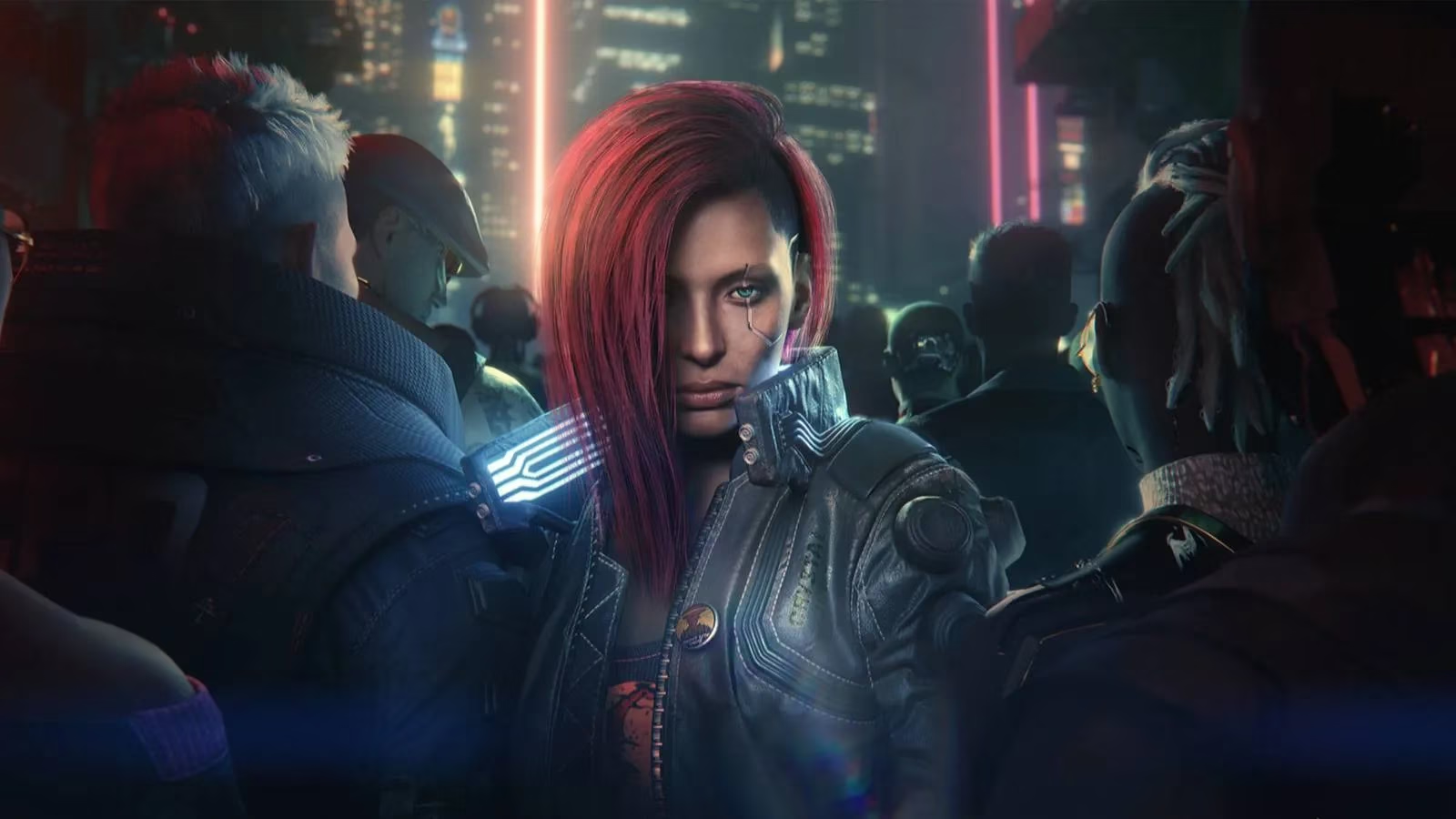
The studio's financial parchment revealed intriguing details about Project Orion's heartbeat. Currently, 135 developers navigate the sequel's neural pathways—a modest uptick from July's 116. But the real story unfolds in the staffing projections:
🔧 Team Expansion Timeline 🔧
| Year | Target Devs | Key Activities |
|---|---|---|
| 2025 | 135 | Core systems prototyping |
| 2026 | 250+ | Major hiring surge begins |
| 2027 | 400 | Full production across Poland/Boston |
This glacial ramp-up whispers volumes about CDPR's dance with another titan—The Witcher 4. That beast still demands feeding first, with its 2027 release window creating necessary breathing room. The studio's corridors will likely witness a developer migration worthy of nomad clans once Kaer Morhen's next chapter concludes.

Remember the original's tortured gestation? Announced when smartphones still had physical keyboards back in 2012, only to emerge blinking into daylight in late 2020. By that brutal metric, CDPR technically has until April 2031 before breaking their own record for prolonged anticipation. Yet this sequel's timeline feels different—less vaporware mystery, more deliberate craftsmanship. The 2022 confirmation now seems like planting a seed in nutrient-rich soil rather than fireworks over unfinished scaffolding.
What does the staffing reveal about the sequel's soul? Consider the implications:
-
Boston studio involvement suggests deeper narrative branches
-
Four-year production runway hints at next-gen world density
-
Team transfer from Witcher 4 implies shared tech foundations

Whispers in dark net forums speculate wildly about what this extended bake time means for Night City's evolution. Will brain dances feel more visceral? Could rogue AIs colonize entire districts? The original's redemption arc through Phantom Liberty DLC set high stakes—players now expect revolutionary leaps, not incremental upgrades. That pressure cooker environment might explain CDPR's cautious staffing approach, avoiding the crunch ghosts that haunted their last cybernetic creation.
Outside the studio's Warsaw stronghold, the financial report numbers spark equal fascination. Cyberpunk 2077's commercial resurrection stands as a rare industry phoenix tale—proof that broken games can transcend their launch scars through relentless polish. This hard-won trust becomes the sequel's invisible currency. When you've walked through fire with an audience, the next offering can't just be good; it must rewire expectations.
So the countdown ticks toward 2028 and beyond. Rain still falls on Night City's holographic billboards, but now they display a subtle promise: 'Under Construction—Return Imminent.' The road stretches long, but redemption arcs often do.