Voice Actor Elias Toufexis Confronts AI Dilemma After Game Cancellations
Elias Toufexis passionately opposes AI voice replication, emphasizing the emotional depth and rights of human performers in the gaming industry’s evolving landscape.
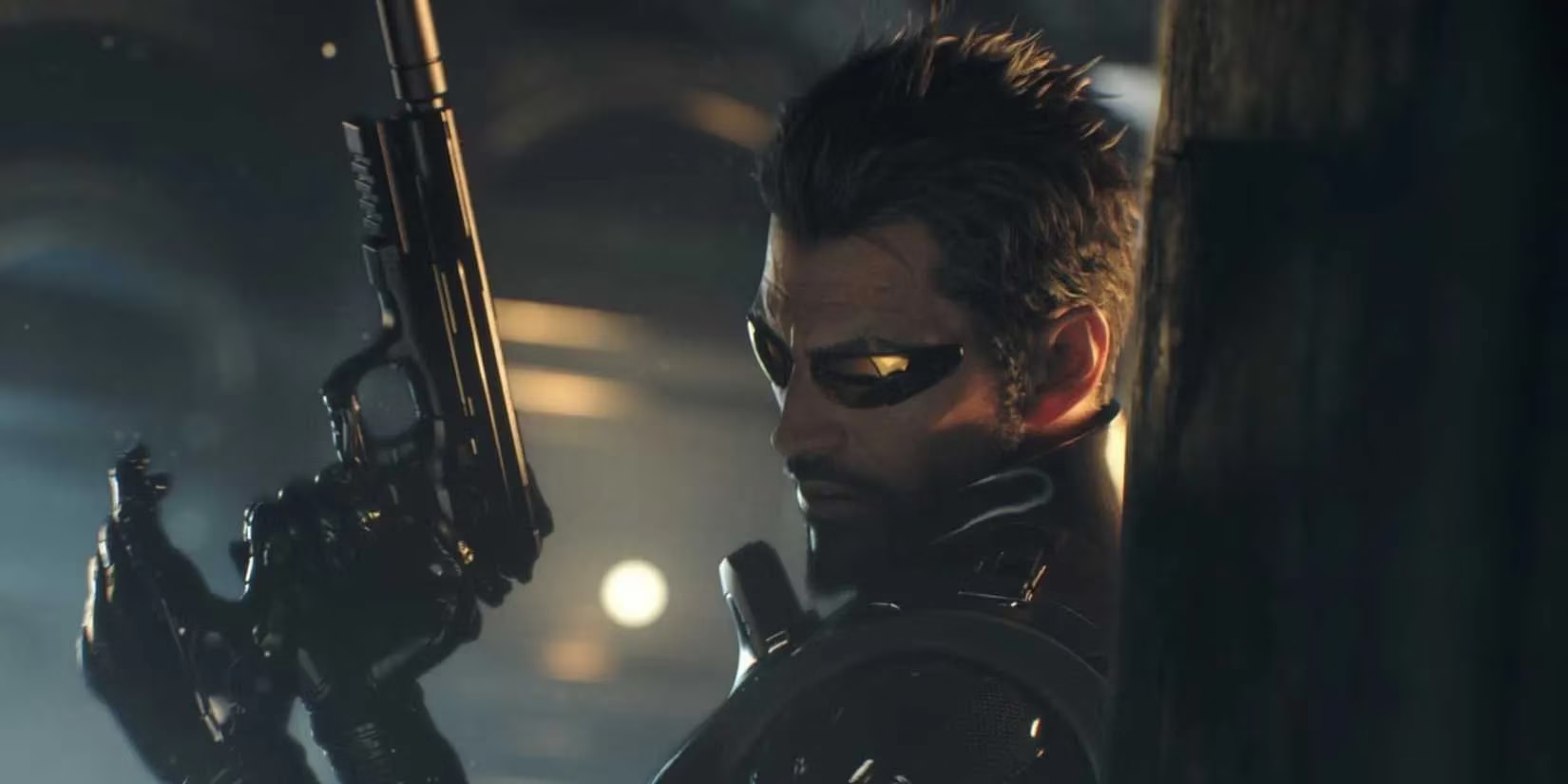
As a reporter embedded in the gaming industry's evolving landscape, I've witnessed firsthand how Elias Toufexis' passionate rejection of an AI voice mod reverberated through our community. When a Cyberpunk 2077 modder used generative AI to recreate his iconic Deus Ex character Adam Jensen last month, Toufexis didn't mince words: "No. Do not f***ing do that." This raw response comes from an artist whose recent voice work on Perfect Dark vanished overnight when Microsoft canceled the project—joining Deus Ex's abrupt shelving in what's becoming an epidemic of discarded creative labor. For performers like Toufexis, whose vocal cords sculpted Jensen's cybernetic grit across two beloved titles, AI replication feels like watching grave robbers dig up buried artistry.
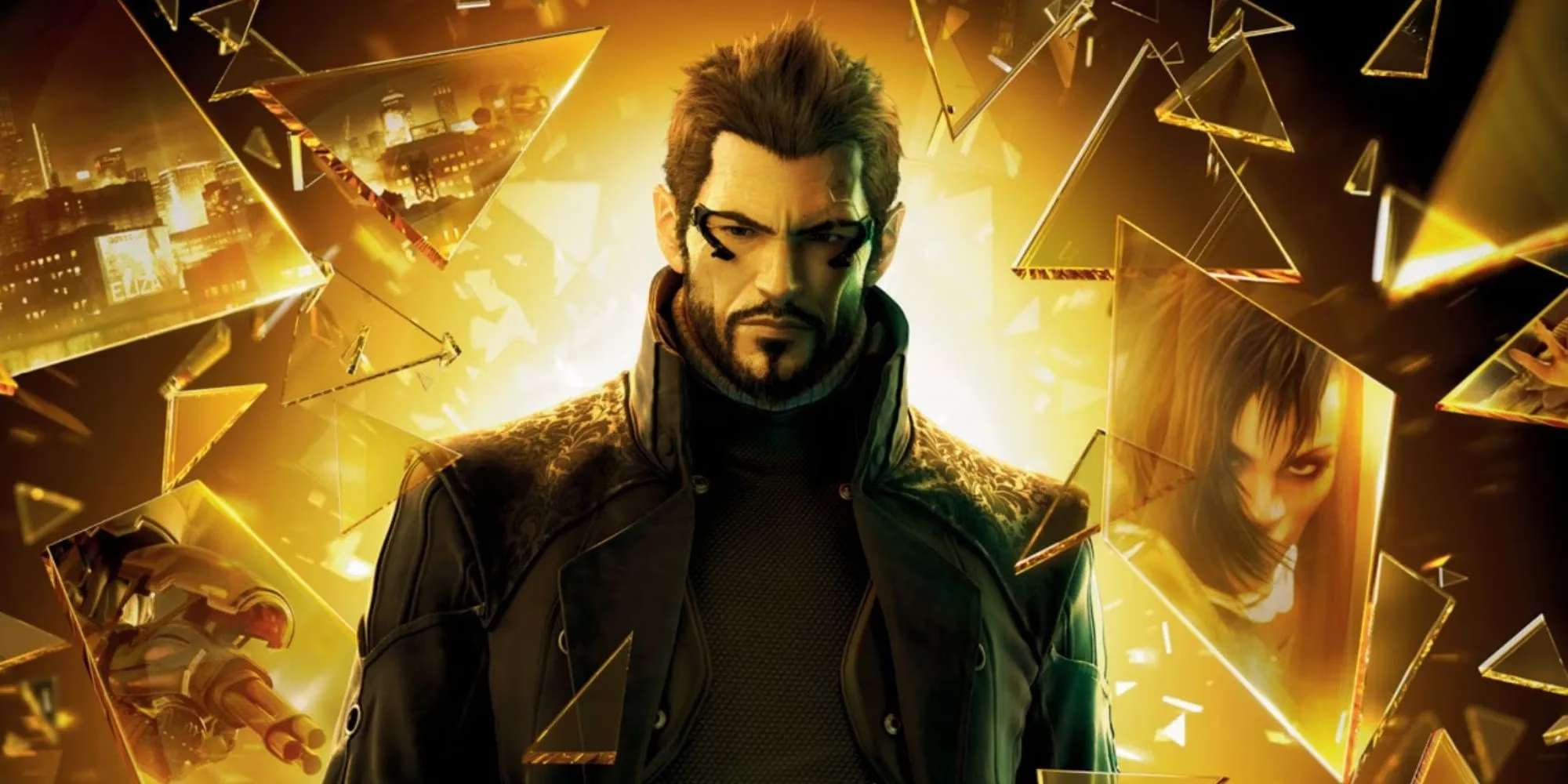
The Soul Behind the Synthetic Voice
Toufexis' connection to Adam Jensen transcends paycheck professionalism. When he bid farewell to Jensen on Reddit after the franchise's cancellation, thousands of gamers shared memories of how that gravelly timbre made them believe in augmented humanity. Voice acting in RPGs operates like neural lacework—each line reading weaves emotional circuitry between player and character. Yet AI commodification threatens to reduce these performances to soulless vocal fonts, erasing the:
-
🎙️ 200+ hours of booth sessions refining Jensen's cynical yet idealistic cadence
-
💔 Personal investment that transforms code into relatable pathos
-
⚖️ Legal rights protecting vocal identity as intellectual property
"These sudden cancellations are financial earthquakes," Toufexis confessed on X. "Thousands of dollars I counted on disappeared when Perfect Dark got scrapped—now every morning I wake up wondering if today's project will vaporize."
Industry Turbulence and AI's Double-Edged Sword
| Reality Check | Human Impact |
|---|---|
| 45% of AAA studios experienced layoffs in 2024 | 21,000+ developers lost jobs |
| 18 major game cancellations since 2023 | $2.1M average lost voice acting work per project |
| 67% surge in AI voice tools | 52% of actors report unauthorized vocal replication attempts |
This volatility makes AI's convenience dangerously seductive. Why hire humans when algorithms can generate endless dialogue? But treating voices like replaceable batteries ignores how Toufexis' performance made Jensen feel like a whiskey-soaked Shakespearean hero trapped in a cybernetic tragedy. Generative AI in this context is like 3D-printing Van Gogh's brushstrokes—technically impressive but emotionally barren.
People Also Ask
Why do voice actors oppose AI recreation even in fan projects?
It’s about consent and precedent—Toufexis views unauthorized replication as digital identity theft that normalizes bypassing performers' rights.
How does game cancellation financially impact actors?
Like architects watching blueprints burn, they lose both completed pay and residual opportunities from iconic roles that might’ve spanned decades.
Can AI truly replicate emotional performance?
Current tech mimics cadence but can’t replicate lived experience—Toufexis’ Jensen growl emerged from imagining his own body being torn apart for augments.
The Human Element in the Machine Age
Amid studio closures and AI encroachment, Toufexis' stance represents a crucial stand for artistic integrity. Voice acting remains one of gaming's last purely human frontiers—where a single whispered line can haunt players longer than any algorithmically generated quest. Protecting this requires industry-wide safeguards:
🔹 Stricter copyright laws treating vocal patterns like fingerprints
🔹 "No AI" clauses in performer contracts becoming standard
🔹 Player education about supporting human-crafted experiences
Yet the path forward remains fraught. As generative tools advance faster than legislation, we risk a future where new "performances" of Jensen could emerge without Toufexis' involvement—a dystopian echo that makes the Deus Ex universe feel chillingly prophetic.
When pixels fade and consoles power down, we remember how a voice made us feel human in digital worlds. If we allow AI to sever that connection, what silent void awaits our storytelling future? Does convenience justify erasing the fragile magic that turns coded vibrations into art that lingers in our bones like phantom augments?