Why Cyberpunk 2077's Divisive Endings Are Its Greatest Strength
Cyberpunk 2077 endings deliver a haunting, melancholic narrative that powerfully reflects Night City's bleak allure and emotional depth.
As a player who's spent countless hours navigating the neon-soaked streets and corporate hellscapes of Night City, I have a complicated relationship with Cyberpunk 2077's conclusions. Like many, I remember the initial sting of that final mission, the creeping realization that no matter which path I chose, V's story wasn't heading toward a sunny resolution. The journey felt epic—full of chrome, chaos, and compelling characters—but the destination always seemed shrouded in the same melancholic fog that permeates the city itself. Yet, the more I reflect on it, the more I believe this very absence of a clean, happy ending is what makes Cyberpunk 2077's narrative so hauntingly effective and true to its world.
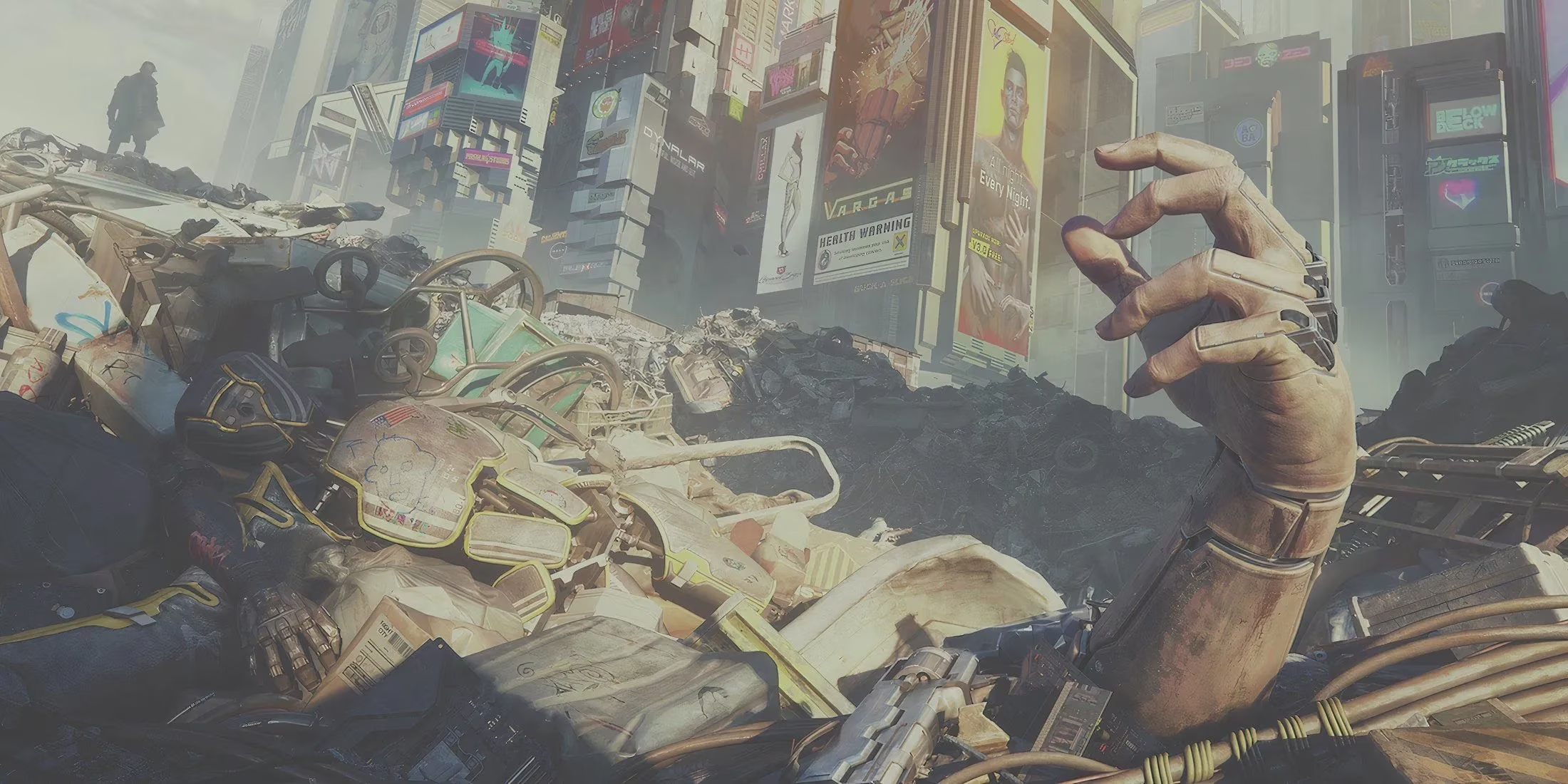
Let's be real—unlocking those endings was no small feat. I chased every lead, completed every gig, and maxed out my relationships with Johnny, Panam, and Judy, hoping to shape a better fate. The game presents us with seven distinct conclusions (six from the base experience and the brilliant, gut-wrenching addition from Phantom Liberty). On the surface, they're wildly different:
-
The Star: Riding off into the Badlands with the Aldecaldos.
-
The Sun: Becoming the new king of the Afterlife.
-
Temperance: Letting Johnny Silverhand keep your body.
-
The Devil: Surrendering to Arasaka.
-
The Reaper: The secret "Don't Fear the Reaper" solo assault.
-
The World: The new Phantom Liberty ending.
Each path involves different allies, locations, and final confrontations. But here's the thing I've come to appreciate—beneath those surface-level variations, they all share a profound, unifying sadness. There is no true "win." Even the most hopeful outcomes, like leaving with the Aldecaldos, are tempered by the ominous ticking clock of V's condition. The "best" endings are merely different shades of gray, not pure white.
This design choice initially frustrated me. After investing 80+ hours into a single playthrough, I wanted catharsis! I wanted my V to get the cure, settle down, and watch the sun rise over a peaceful future. But that desire, I now realize, was fundamentally at odds with the game's core identity. Night City is a character in itself—a beautiful, bloated corpse of a metropolis that consumes dreamers and spits out cynics. A traditionally happy ending would have felt like a betrayal, a jarring tonal shift that undermined everything the game had built.
The genius lies in the ambiguity. Because no ending is presented as the "canon" or "correct" one, my choices felt heavier, more personal. In other RPGs, once you discover the "good" ending, the others often feel like failures or curiosities. Not here. In Cyberpunk 2077, my first ending—where I gave my body to Johnny—felt like a tragic, beautiful sacrifice. It was my story's conclusion, not the game's suggestion of what should have happened. This lack of a narrative safety net makes every decision from the point of no return feel terrifyingly final and uniquely mine.
I've seen the discourse. I know many players were disappointed. The request for a happier conclusion is understandable. We grow attached to V, to our love interests, to our chooms. We want a reward for our struggle. But I firmly believe that softening the endings would dilute what makes Cyberpunk 2077 special. The game is a meditation on legacy, mortality, and the soul-crushing weight of capitalism. A saccharine conclusion would have turned it into just another power fantasy, stripping away its poignant, cautionary edge.
Looking ahead to the much-anticipated Project Orion, I sincerely hope CD Projekt Red resists the pressure to "fix" the endings by adding a purely positive one. The sequel has a golden opportunity to double down on this narrative bravery. Instead of seeking a happy ending, perhaps it could explore even darker, more nuanced conclusions or expand on morally ambiguous choices that truly challenge the player.
-
😔 Embrace the Bleak: The dystopia should feel inescapable.
-
🤔 Complexity Over Clarity: Morality should remain a spectrum, not a binary.
-
🎭 Player Agency: Our choices should define the flavor of the tragedy, not its existence.
In the end, Cyberpunk 2077 taught me that a story's power isn't always in providing comfort. Sometimes, it's in holding up a dark mirror and forcing us to sit with the discomfort. The endings aren't a failure of design; they are its ultimate, uncompromising success. They ensure that long after the credits roll, Night City—and the fate of the merc who tried to conquer it—lingers in your mind, a ghost in the machine. For a game about the fusion of humanity and technology, that haunting, human sense of melancholy is the most fitting legacy of all.